
Welcome to Karlstad University



News
-
2026-10-22
Web services being gradually restored
Many of Karlstad University's web services will begin to be brought back online on Thursday morning following a security update. However, it may take some time before all tools are fully available.
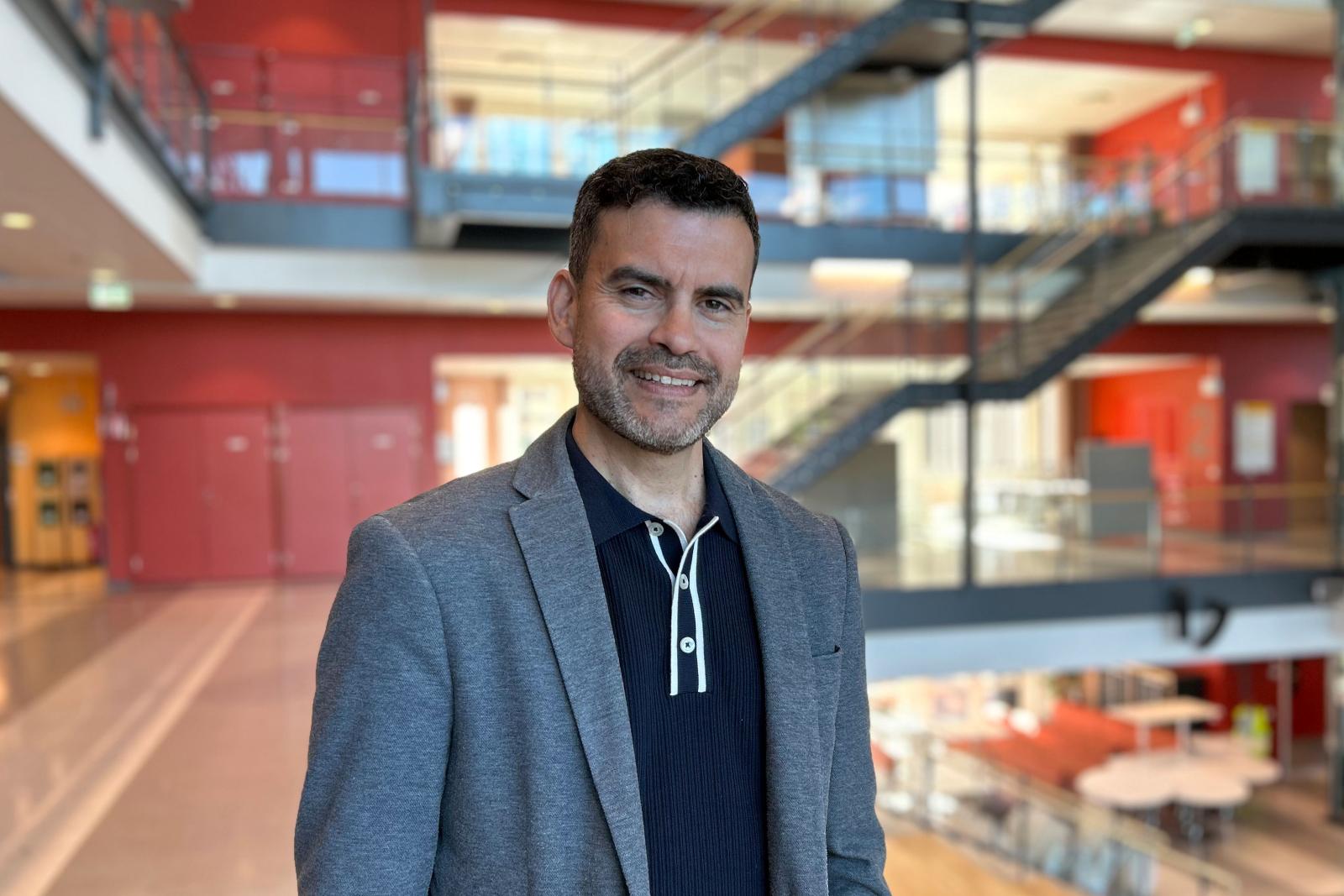
– There is a certain degree of complexity involved, as we need to ensure that the update has been fully implemented across the services before we can reconnect them, says Mats Möller, IT Director at Karlstad University.
He explains that, alongside the university’s own efforts, Sunet is also working to restore functionality in its services, including Sunet Play, to which Kau Play is connected. This has affected students in particular.
-
2026-10-21
International PhD Course Highlights Sustainable and Digital Service Research
PhD students from several European universities gathered at Karlstad University for a course on sustainable and digital service marketing and management. The course combines contemporary research perspectives with international collaboration, networking, and the development of participants’ own doctoral research projects.
The course Sustainable and Digital Service Marketing and Management: Theory and Research provides PhD students with advanced knowledge of theories, methods, and emerging perspectives in service marketing and service management. Particular emphasis is placed on sustainable services, digital transformation, service innovation, and circular business models, offering participants a current overview of service research with a focus on sustainability, digitalization, and systems transformation.
-
2026-10-21
Resilience in Focus as DAMI Brings Together Industry and Research
On 20 October, representatives from industry, business and academia came together for a day dedicated to the theme of resilience. How can companies and organisations build resilience in a time marked by geopolitical uncertainty, climate-related challenges and disruptions to global supply chains?
The day began with a welcome address from Anna Ericson Öberg, Director of DAMI, who emphasised the importance of collaboration in addressing the challenges of the future.
“I hope we will have a rewarding day together and leave here with renewed energy and new ideas,” said Anna Ericson Öberg.
She described DAMI as an interdisciplinary research centre that creates meeting places where research, knowledge and networks contribute to strengthening business development and competitiveness.
-
2026-10-21
Conference on energy storage
The Swedish Electricity Storage and Balancing Centre (SESBC) brought together researchers, companies and public-sector representatives at a conference in Karlstad to discuss future energy solutions.
The Centre has recently been granted funding for a further five years, starting in 2027. During this new phase, Karlstad University will increase its involvement, with researchers in physics, electrical engineering, computer science and applied mathematics contributing to the Centre’s work.
-
2026-10-19
Karlstad University joins EU project on responsible research assessment
Karlstad University is one of 12 European partner organisations participating in the RDA project, which aims to develop more responsible approaches to research assessment.
“The goal is to contribute to a research evaluation ecosystem in which research is assessed on the basis of a broader range of values than traditional performance metrics,” says Georgios Pavlidis, Associate Professor of Sociology and RDA’s project leader at Karlstad University.
As part of the project, researchers will develop tools and indicators to help universities and research organisations assess their research based on quality, openness, relevance and societal impact, rather than relying solely on traditional measures such as citations and other bibliometric indicators.
-
2026-10-16
A Hockey Defenseman with a Passion for Math
Already at the age of seven, Malte Pihlström began playing hockey alongside several other sports. In his early teens, however, he decided to focus on hockey. Today, he is the captain of Färjestad BK’s U20 team, with his sights set on earning a place on the club’s senior team. Alongside his elite sports career, he studies at Karlstad University and is enrolled in the Elite Sports University program.
Malte Pihlström was born and raised in Karlskoga, a town with a strong hockey tradition and a team competing in Sweden’s second-highest league, HockeyAllsvenskan.