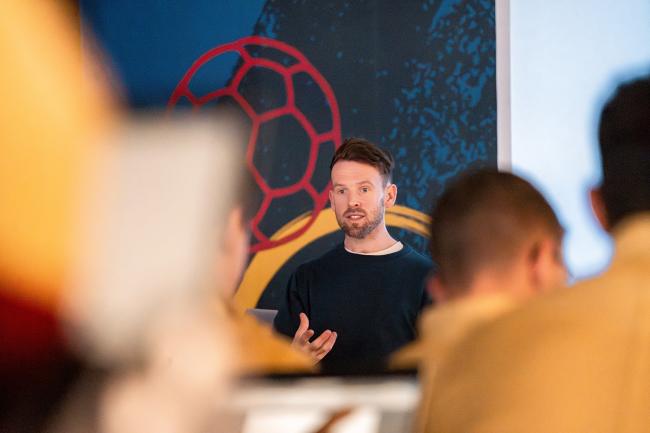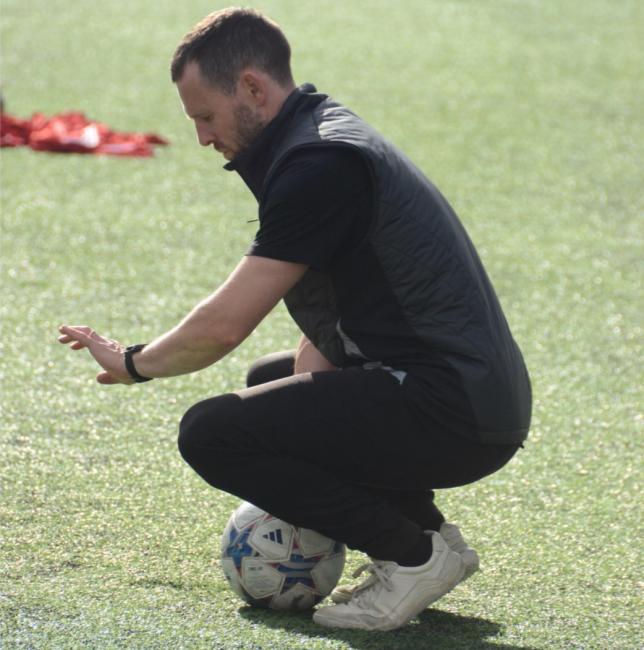
James Vaughan from New Zealand, a former elite futsal player and football coach, currently serves as academy director at Västerås SK. He is also an author and researcher, including as an affiliated researcher at the Swedish Sports Confederation’s Research Centre for Youth Sports at Karlstad University.
James Vaughan earned his PhD from the University of Queensland in 2020 in Sports Coaching with the thesis “Creativity in football: Conceptual frameworks and cultural case studies to inform coaching praxis.” The work focuses on understanding how creativity emerges and develops in players and teams. He argues that creativity in sport is not only an individual trait but something that develops through the interaction between players, teams, environments, cultures, and training. In short, context is everything.
Will your research at Karlstad University focus on the same area?
“Broadly speaking, yes, says James Vaughan. I want to continue studying the sociocultural influences on football and coaching. When we understand our environment and player development in this way we can amplify the favourable aspects and drown out the detrimental. In practice it’s about providing real support based on the lived experiences of players, parents and coaches, where they are, hear and now.
There is research at the National Research Centre for Youth Sports showing that there is considerable status associated with having one’s child in a football academy. Participation in football academies can involve significant financial, time-related, and social commitments for families. At the same time, parents describe academies as a sphere that helps develop children and young people in terms of order, discipline, clear expectations, and the ability to perform and handle adversity. Do you agree with that view?
“Parents and players experience will differ greatly, but the organisations, structures and ways of working that have developed here and around the world in football have placed an insidious amount of value on status and prestige. My dissertation deals with this, and we had an article published in 2022 on this topic. In the article, we examine how youth sports and (talent) development environments in Sweden have adapted to – and are constrained by – social and cultural forces. Empirical findings from an 18-month ethnographic case study highlight how these constraints affect young football players’ skill development and psychological well-being. In essence the balance between competition and collaboration is skewed and emphasises competition between teammates. Many clubs turn a blind eye to these issues, but there can be serious consequences for players motivation and mental health. Having an intent to collaborate means you see your teammates in a different light, over time this refines skill on and off the ball and can provide a deeper sense of belonging. The benefits of a collaborative ethos were evident when studying the football culture in Barcelona as part of my Ph.D.”
What can be done to achieve a good balance in academies? Do you think your research at the National Research Centre for Youth Sports will contribute to that?
“I certainly hope so. It is about both doing the right things on the pitch with children and young people and finding a balance within the structure and culture of academies. It is important to see every unique person within the team and to focus on the processes that fuel their development rather than the results. Working together to ensure that each child feels seen will ultimately lead to better results on the pitch and in life.