
Welcome to Karlstad University


News
-
2026-10-26
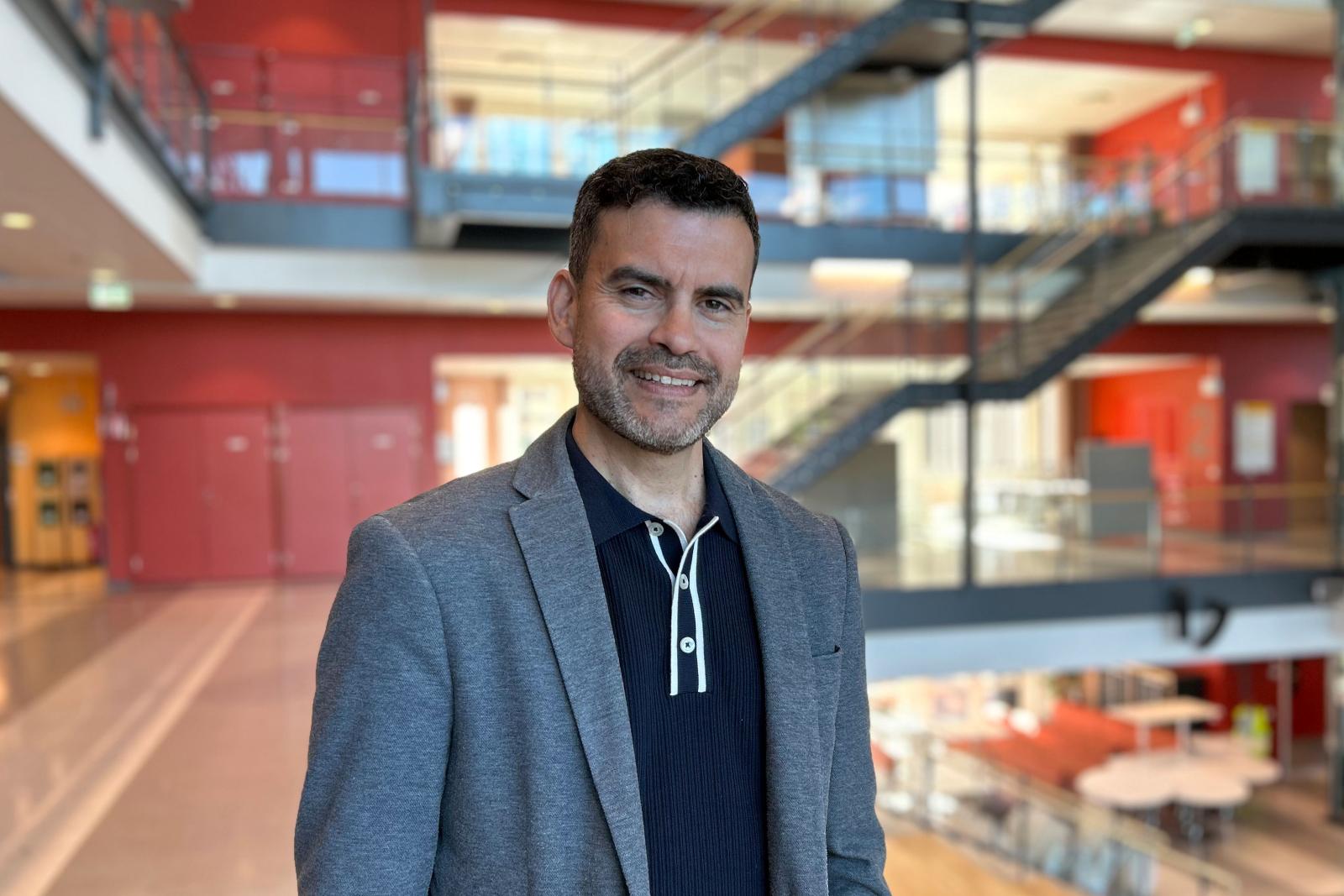
Words from senior management: Knowledge environments are built over time
As the Service Research Center (CTF) celebrates its 40th anniversary, I find myself reflecting on my own time as a doctoral student at Frödingshöjd. What I remember most clearly are my colleagues, our conversations, and the way we tested ideas together. Looking back, I can see just how much that everyday environment contributed to my development as a researcher.
The anniversary also provides an opportunity to reflect on how we enable knowledge environments to develop and thrive over time.
This is a question we have been working on in the Quality Council. We are now in the final round of the university’s self-initiated six-year cycle of research evaluations, which aims to identify strengths and areas for development through external peer review.
-
2026-10-26
Research for Better Prosthetic Solutions in Ukraine
How can we ensure that a 3D-printed prosthetic limb can withstand the complex loads encountered in everyday life? This is a question that researchers from France and Karlstad University are now working together to answer.
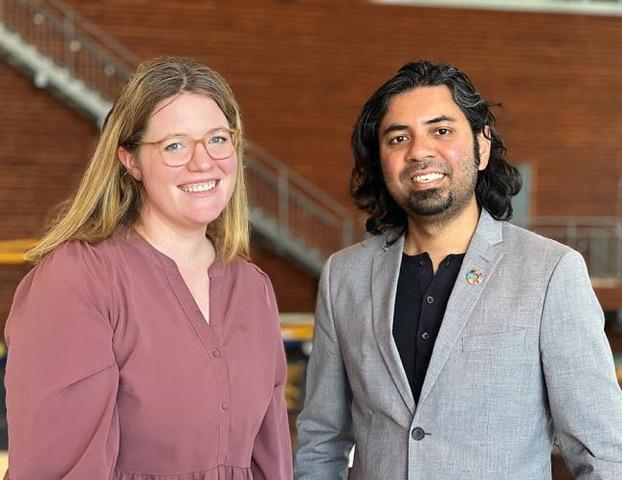
Associate Professor Dmytro Vasiukov, originally from Ukraine and currently based at Institut Mines-Télécom in France, is visiting Karlstad University as part of the MORPH project, in which Associate Professors Anton Tkachuk and Anders Biel, both from the Department of Mechanical and Materials Engineering at Karlstad University, are involved. The project focuses on investigating how 3D-printed composite materials used in prostheses for people with limb loss respond to different types of mechanical loading.
-
2026-10-22
Web services being gradually restored
(Updated 261023, 13:35) Most of the University's web services were restored on Thursday following a security update. Shortly after midday on Friday, Kau Play was also brought back online, although verification work is still ongoing.
– There is a certain degree of complexity involved, as we need to ensure that the update has been fully implemented across the services before we can reconnect them, says Mats Möller, IT Director at Karlstad University, on Thursday morning.
He explains that, alongside the university’s own efforts, Sunet is also working to restore functionality in its services, including Sunet Play, to which Kau Play is connected. This has affected students in particular.
-
2026-10-21
International PhD Course Highlights Sustainable and Digital Service Research
PhD students from several European universities gathered at Karlstad University for a course on sustainable and digital service marketing and management. The course combines contemporary research perspectives with international collaboration, networking, and the development of participants’ own doctoral research projects.
The course Sustainable and Digital Service Marketing and Management: Theory and Research provides PhD students with advanced knowledge of theories, methods, and emerging perspectives in service marketing and service management. Particular emphasis is placed on sustainable services, digital transformation, service innovation, and circular business models, offering participants a current overview of service research with a focus on sustainability, digitalization, and systems transformation.
-
2026-10-21
Resilience in Focus as DAMI Brings Together Industry and Research
On 20 October, representatives from industry, business and academia came together for a day dedicated to the theme of resilience. How can companies and organisations build resilience in a time marked by geopolitical uncertainty, climate-related challenges and disruptions to global supply chains?
The day began with a welcome address from Anna Ericson Öberg, Director of DAMI, who emphasised the importance of collaboration in addressing the challenges of the future.
“I hope we will have a rewarding day together and leave here with renewed energy and new ideas,” said Anna Ericson Öberg.
She described DAMI as an interdisciplinary research centre that creates meeting places where research, knowledge and networks contribute to strengthening business development and competitiveness.
-
2026-10-21
Conference on energy storage
The Swedish Electricity Storage and Balancing Centre (SESBC) brought together researchers, companies and public-sector representatives at a conference in Karlstad to discuss future energy solutions.
The Centre has recently been granted funding for a further five years, starting in 2027. During this new phase, Karlstad University will increase its involvement, with researchers in physics, electrical engineering, computer science and applied mathematics contributing to the Centre’s work.