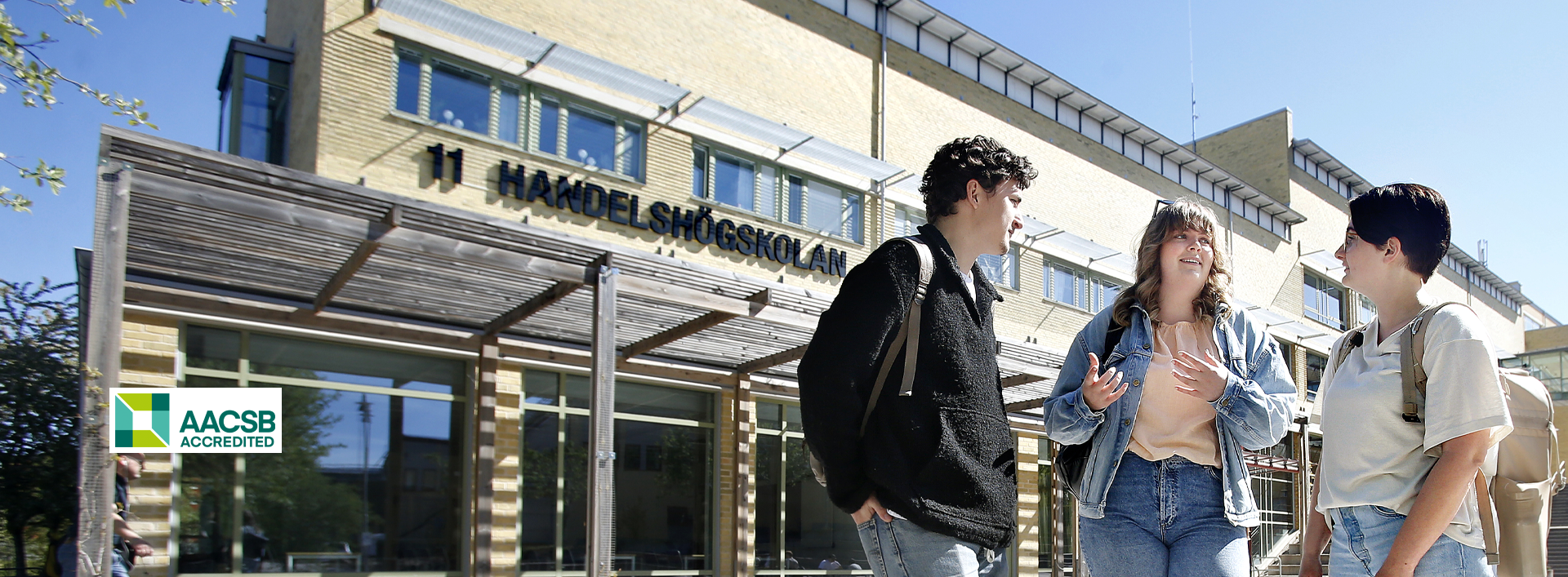
Welcome to Karlstad Business School
Knowledge is worth nothing without the ability to use it.
Looking for your place to shine globally? - Here are our international programmes taught in English






News
-
2026-10-27
40 Years of Questions, Answers and New Perspectives
The Service Research Center (CTF) brought together researchers, alumni and partner organizations to celebrate its anniversary with reflections on the past and perspectives on the future.
From a small research group focusing on the emergence of the service economy to an internationally recognized research centre with significant impact on service research, innovation and value creation. As CTF at Karlstad University celebrates its 40th anniversary, it marks four decades of research that has followed and explained major societal changes.
Through close collaboration with businesses and the public sector, CTF has contributed new knowledge on everything from service quality and customer experiences to digitalization, AI and sustainable transformation.
-
2026-10-21
International PhD Course Highlights Sustainable and Digital Service Research
PhD students from several European universities gathered at Karlstad University for a course on sustainable and digital service marketing and management. The course combines contemporary research perspectives with international collaboration, networking, and the development of participants’ own doctoral research projects.
The course Sustainable and Digital Service Marketing and Management: Theory and Research provides PhD students with advanced knowledge of theories, methods, and emerging perspectives in service marketing and service management. Particular emphasis is placed on sustainable services, digital transformation, service innovation, and circular business models, offering participants a current overview of service research with a focus on sustainability, digitalization, and systems transformation.
-
2026-10-12
Janet Rasaei, doctor in business administration at Karlstad Business School
With the dissertation "Control Through Configuration: Management Control Systems for Performance and Sustainability Compliance in Global Supply Chains" Janet Rasaei is doctor in business administration at Karlstad Business School.
Why should ordinary consumers care about how companies manage their global supply chains?
-
2026-10-08
Legal Education Should Do More Than Teach the Law as It Stands
Teaching, research, and the work of building legal education programmes have been a common thread throughout Nick Dimitrievski’s years at Karlstad University. His pedagogical contributions are now being recognised through the distinction of Excellent Teacher in Law.
Nick Dimitrievski, what does being named an Excellent Teacher in Law mean to you?
– It is both gratifying and honouring, and I see it as recognition of long-term work in which teaching, research, and the development of legal education have been closely interconnected. Teaching is not an activity that exists alongside research; it is a central part of the academic mission. For me, it has been about combining subject expertise, pedagogical reflection, and a strong conviction that legal education should do more than simply convey knowledge of the law as it currently stands.
-
2026-10-08
CTF celebrates 40 years: Welcome to the anniversary event on 22 October
How can service research help address future challenges in AI, digitalisation, health, and the sustainability transition? On 22 October, the Service Research Center (CTF) at Karlstad University invites researchers, partners, alumni, and other interested guests to celebrate CTF's 40th anniversary and discuss the societal challenges of the future.
The anniversary event will offer reflections on four decades of research, perspectives from some of the people who have been part of the journey, and conversations about the issues shaping tomorrow's society.
40 years of research for a changing society
"When CTF was founded in 1986, service research was a relatively unexplored field. Early on, we recognised the need to understand the growing service economy and contribute new knowledge," says Bo Edvardsson, professor of Business Administration and one of CTF's founders.
-
2026-09-25
Home Sorting Initiative in Karlstad Municipality Gives Students Hands-On Project Management Experience
The introduction of new waste sorting bins in Karlstad Municipality has turned into a perfect learning opportunity for students enrolled in the Master's Programme in Project Management at the School of Business.
– This project contains many fascinating elements that fit perfectly with our programme, says John Johansson, lecturer in Business Administration at Karlstad Business School.
The project is something of a dream case for project management education. It is driven by legal requirements, affects people's everyday lives, and involves extensive logistics that must be carefully planned and executed.