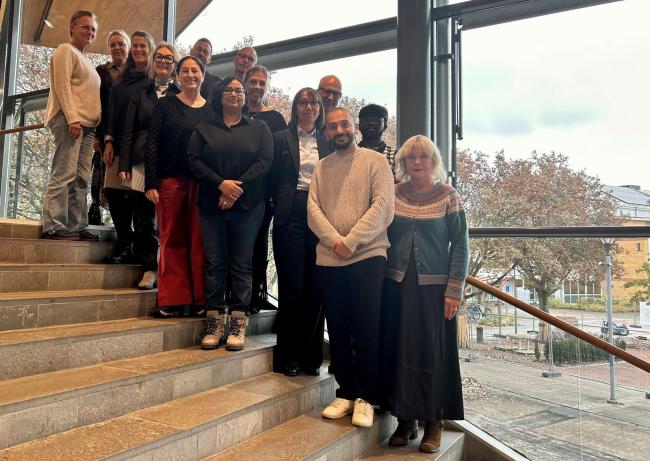
How can subject-specific education research strengthen student learning? This is a central question for the newly established graduate school BEPPE. Its goal is to develop knowledge that can enhance both teacher education and classroom teaching.
BEPPE – Best Practice? A Graduate School on Subject-Specific Didactic Models in Primary Teacher Education is aimed at teacher educators and is a collaboration between Karlstad University and the University of Gothenburg, with Karlstad University serving as the host institution.
“Didactic models are a well-established area of research at both Karlstad University and the University of Gothenburg,” says Martin Stolare, Professor of History at Karlstad University and project leader of BEPPE. “However, we have not previously run a graduate school specifically focused on this area. BEPPE represents a further development of the research already conducted within ROSE, Karlstad University’s multidisciplinary research environment for subject-specific education research, Research on Subject-specific Education.”
From Research to Practice
Together with his research colleagues, Martin Stolare aims to develop deeper knowledge about how subject-specific didactic models function in schools and how they can become useful tools for teachers.
“Since BEPPE is directed at teacher educators, it is important to connect these models to teacher education and develop them into practical tools for classroom teaching. In the long term, we hope that the graduate school will contribute to improving the quality of teaching in schools and thereby create better conditions for student learning.”
Making Science More Accessible to Students
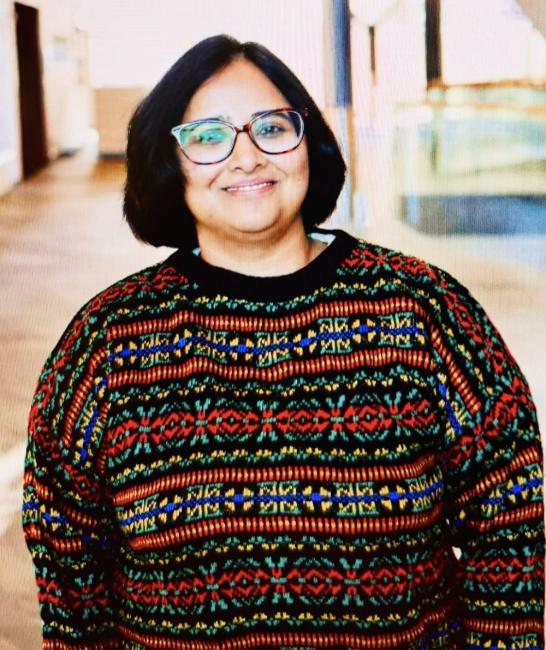
One of the doctoral students in BEPPE is Mihirani Samarakoon, a PhD candidate in Biology at Karlstad University. After many years of teaching science and biology in Sri Lanka, she wants to investigate how teaching can support students’ understanding of biological phenomena.
“I have always been interested in how students learn science and how teaching can be developed to support their understanding. I hold a master’s degree in Science Education from Sri Lanka. During that programme, my interest grew in how learning can be made more engaging and how students can be supported in understanding and communicating scientific concepts.”
In 2023, Mihirani Samarakoon moved to Sweden. After completing a master’s degree in Biology at Mid Sweden University in Sundsvall and working in preschool settings, she decided to pursue a research career.
“I applied to BEPPE to combine my teaching experience with research. I hope that the results of my work will contribute to teaching methods that make science more understandable, meaningful, and interesting for younger students.”
Bringing Geography Education Closer to Students’ Everyday Lives
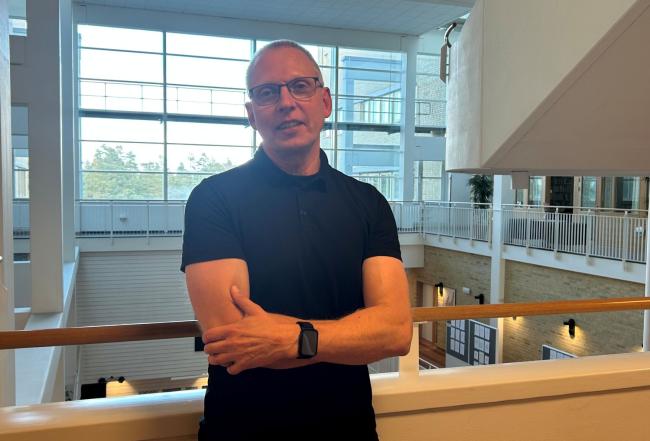
Making education meaningful is also a driving force for Patrik Magnusson, Lecturer in Geography at Karlstad University and PhD candidate in Human Geography within BEPPE.
“I see great potential in connecting the school subject of geography with students’ everyday lives. By building on students’ own experiences, teaching can become more relevant and meaningful. The goal is not to teach about everyday life as such, but to help students understand it better through geographical perspectives, while at the same time allowing their experiences to deepen their understanding of the subject.”
Patrik Magnusson has worked in teacher education since 2020 and has extensive experience teaching social science subjects, particularly in compulsory school. He is qualified to teach geography, religious studies, and history, and he is the author of the licentiate thesis Geography Teachers’ Subject Understanding: Subject-Didactic Narratives as a Reflective Arena Create Knowledge About School Geography.
He now hopes to build on his previous work and deepen his expertise as a teacher educator.
“BEPPE provides an opportunity for me to further develop my knowledge as a teacher educator. Hopefully, my students will benefit from this, and ultimately so will the pupils they teach in their future classrooms. BEPPE is a way for me to contribute to the development of teacher education and geography teaching in schools.”
Funding from the Swedish Research Council
The Swedish Research Council (Vetenskapsrådet) has awarded Best Practice? A Graduate School on Subject-Specific Didactic Models in Primary Teacher Education (BEPPE) SEK 42 million over a four-year period.
The project runs from 2026 until 2030, with activities spanning at least four years.
Read more about the BEPPE graduate school (Swedish website).