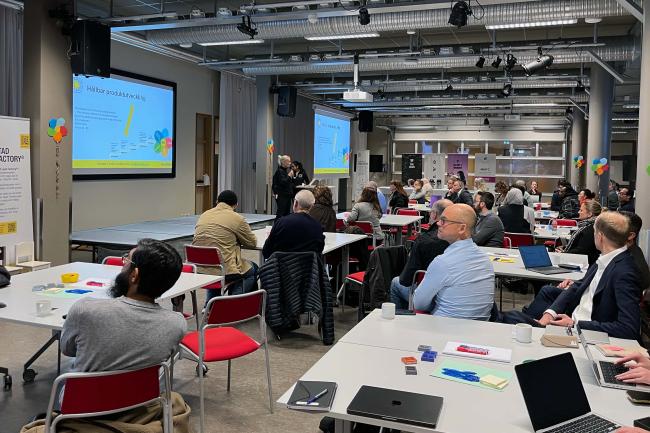
On 20 October, representatives from industry, business and academia came together for a day dedicated to the theme of resilience. How can companies and organisations build resilience in a time marked by geopolitical uncertainty, climate-related challenges and disruptions to global supply chains?
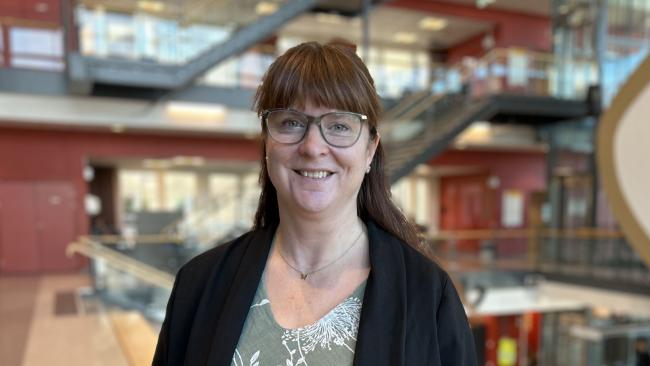
The day began with a welcome address from Anna Ericson Öberg, Director of DAMI, who emphasised the importance of collaboration in addressing the challenges of the future.
“I hope we will have a rewarding day together and leave here with renewed energy and new ideas,” said Anna Ericson Öberg.
She described DAMI as an interdisciplinary research centre that creates meeting places where research, knowledge and networks contribute to strengthening business development and competitiveness.
Over the past 15 years, companies around the world have been affected by pandemics, natural disasters, wars, supply chain disruptions and other global challenges. Against this backdrop, resilience was discussed as the ability to anticipate, withstand, adapt to and recover from disruptions while continuing to create value for customers, employees and society.
Opportunities and Challenges of Electrification
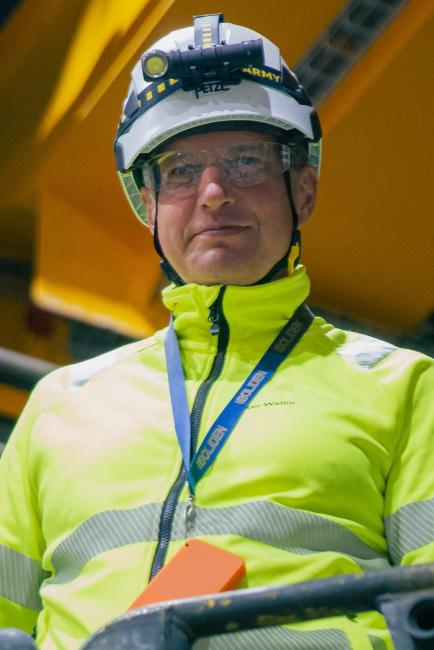
One of the day’s speakers was Peter Wallin from Boliden, who spoke about the company’s efforts to build resilient mines during the ongoing transition towards electrification. The company employs around 8,000 people, operates seven mines and five smelters, and produces metals such as zinc, copper and nickel.
Although Boliden has already implemented extensive measures to minimise its environmental and climate impact, diesel remains an important fuel in its operations. The company is therefore working with partners such as Volvo, Scania, ABB, Epiroc and Sandvik to develop electrified machinery and vehicles.
At the same time, the transition brings new challenges.
“Electrification can strengthen resilience, but it can also create new dependencies. Access to electricity, electricity prices, supply chains and skills will become key issues in the future,” said Peter Wallin.
Spare Parts When They Are Needed
The potential for making industry more resilient through local, demand-driven production was highlighted by Paul Nemes from Sustainable Steel Region and Espen Sivertsen from Ivaldi, who presented their work on a system demonstrator for a resilient industry.
What happens when a critical spare part is unavailable and production comes to a halt? By identifying key components and creating the conditions for local manufacturing using new production methods, the project aims to reduce vulnerability in global supply chains.
“The technology must work, but it is also about people, behaviours, responsibilities and approval processes,” emphasised Paul Nemes.
Among the project’s outcomes is the development of Skippy, a tool that has identified more than 3,000 spare parts and analyses the potential for manufacturing them closer to where they are needed.
Research and Collaboration for Greater Resilience
Dami Day was organised by the DAMI Research Centre at Karlstad University and featured a morning of research presentations, practical examples and dialogue between academia and industry. The aim was to explore how individuals, organisations and societies can strengthen their ability to meet future challenges and opportunities.
Read more about DAMI: