Teaching writing is an important responsibility for Swedish language teachers. A new dissertation examines how future Swedish teachers are prepared for this through mentoring conversations with their school‑based mentors during the School Placement, VFU. The purpose is to understand what kind of knowledge that is created in these dialogues and how the participants themselves perceive the learning potential of the conversations.
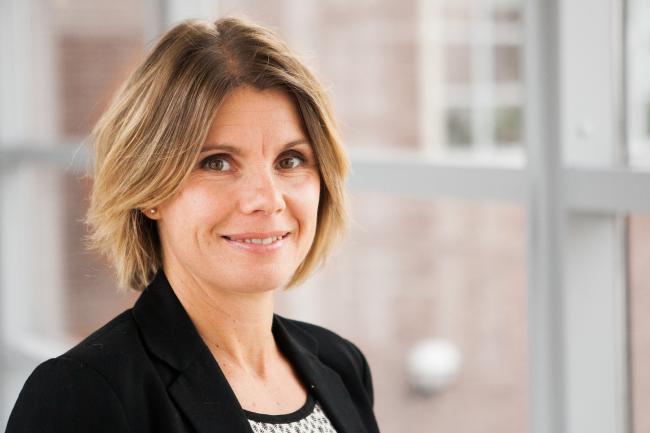
“We have long known that mentor conversations are important for teacher students’ professional development, but what actually happens in these conversations and how it affects learning about subject teaching is not as clear,” says Maria Mollstedt, Doctor of Educational Work at Karlstad University.
The study’s material includes mentoring conversations from eight mentor–student pairs as well as interviews with the participants. The participants describe the primary purpose of the conversations as developing, but the results also indicate good potential to develop subject knowledge and subject‑specific language through these dialogues.
“The results show that the conversations mainly focus on text types and linguistic structures. When the participants discuss how the content can be taught to a specific group of students, genre‑based, process‑oriented, and skills‑oriented approaches become visible. However, more creative, social, and sociopolitical perspectives on writing are addressed only to a limited extent. This raises questions about how writing instruction prepares students for writing outside of school.”
The conversations in the study are often conducted at a concrete and everyday level connected to the student’s own lessons. To create more transferable and generalised knowledge, specific teaching situations need to be placed in a broader context. The results indicate that the mentor’s way of formulating concepts, explaining didactic choices, and connecting the concrete to more general reasoning plays an important role in achieving reflective and more in‑depth conversations.
“Teacher education has been criticised for a gap between theoretical subject knowledge and practical professional work. I hope that this dissertation can contribute perspectives on how knowledge can be built in mentor conversations, on the relationship between theory and practice, and on how the potential of these dialogues can be utilised. The findings may also be useful for understanding how teacher students’ subject knowledge and didactic abilities develop – not only in relation to writing instruction in Swedish, but also in other subject areas.”