Cross-border crises place new demands on collaboration, learning, and preparedness. Through the Swedish-Norwegian Interreg project Incredilab, new knowledge and methods have been developed to strengthen society’s ability to prevent, manage, and recover from crises.
At the project’s final conference, results were presented on resilience, civil defence, crisis preparedness, and innovative learning methods that can contribute to the future of societal safety and security.
Peter Bellström, Project Manager for Incredilab, was highly satisfied with both the conference and the project’s overall results.
– Within the framework of the project, we have accomplished a great deal. Both Collaborate or Collapse and Crisis Lenses are key deliverables. All project members have done an outstanding job. The two card games Let’s Talk About Crisis! and Simple Language-Bridging Card Games are bonus outcomes that demonstrate how crisis preparedness can be practised quickly and easily.
– The games can, for example, be brought into a workplace break room. In Let’s Talk About Crisis!, participants are challenged in an accessible way to test their own readiness for various crisis scenarios. The language-bridging card game, meanwhile, provides opportunities to practise difficult terms in Swedish and Norwegian.
– Developing Let’s Talk About Crisis! has been both interesting and enjoyable, and it seems we have created something that makes training both easy and engaging for work teams across a wide range of organisations, says Malin Wik at information systems at Karlstad University.
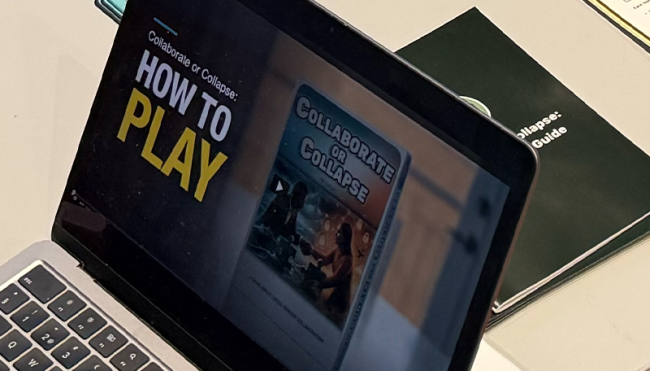
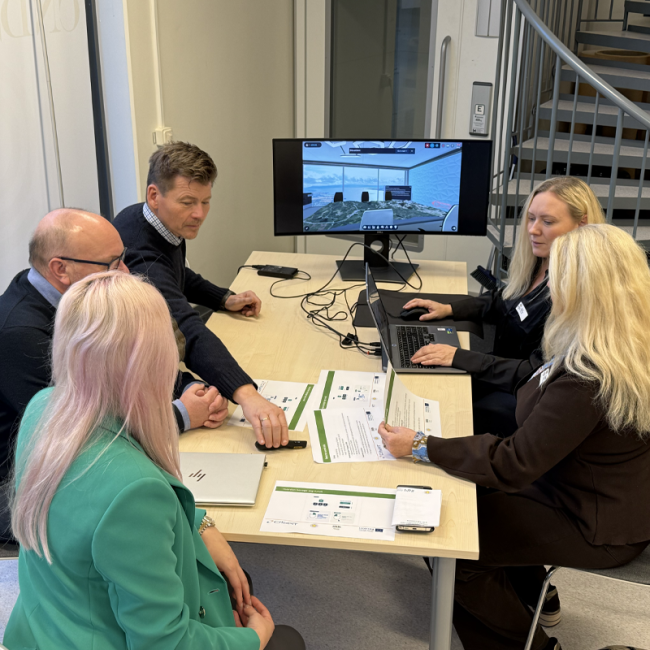
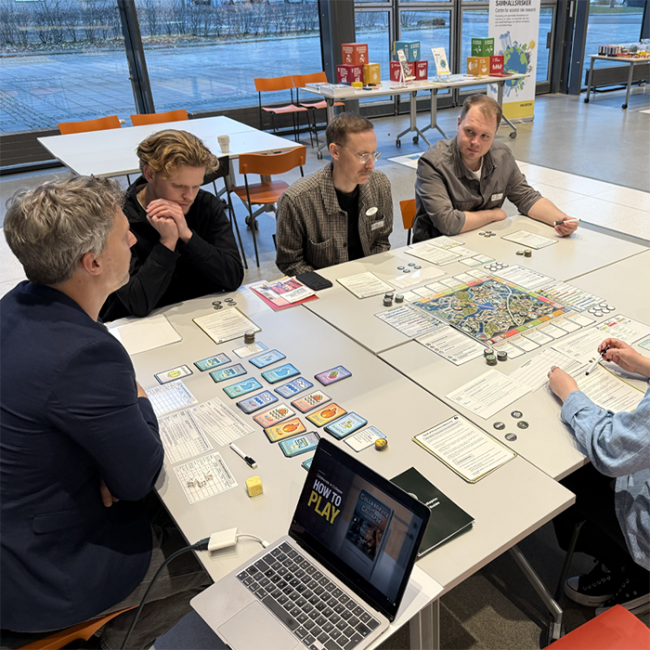
During the conference, participants had the opportunity to try out several of the project’s outcomes. One activity involved playing Collaborate or Collapse, a board game in which players manage different types of critical incidents while allocating limited financial resources to the measures they choose to implement. David Olsson, from the Department of Political Science at Karlstad University, led the work package responsible for developing the board game.
– I found the final conference very successful, says David Olsson. The games we have developed were received positively, and several participants highlighted their potential value for their organisations. The conference opened up new opportunities to disseminate the games and to collect data for an ongoing impact study. For example, we are planning a game session of Collaborate or Collapse with participants in a preparedness coordinator training programme.
Another activity allowed participants to experience Crisis Lenses, an interactive digital game in which different crisis scenarios can be simulated. One scenario, for example, depicts a music festival taking place while a forest fire breaks out nearby.
The game visualises two “lenses”, hence the name Crisis Lenses. Players may be assigned either a tactical role, represented by a tactical lens, or a strategic role, represented by a strategic lens. Together, they must manage the crisis. The game can be used on a standard computer in 2D mode as well as in 3D using VR headsets.
– Collaborating with Geir Ove Venemyr at Inland Norway University of Applied Sciences and with the company Fynd Reality, while also involving Informatics students at Karlstad University, has proved highly rewarding, says Ala Sarah Alaqra, who, together with Geir Ove, was responsible for the work package that developed the digital game.
The interdisciplinary collaboration brought together diverse perspectives and expertise to address technical challenges and make crisis training more accessible, practical, and engaging.
– It was extremely rewarding to meet such engaged participants at the conference, who tested the games and provided valuable feedback,” says Emelie Hindersson, representing RiskLab. “Our next step is to finalise the games and make them available for others to try, draw inspiration from, and use as the basis for capacity-building workshops.
Voices from conference participants
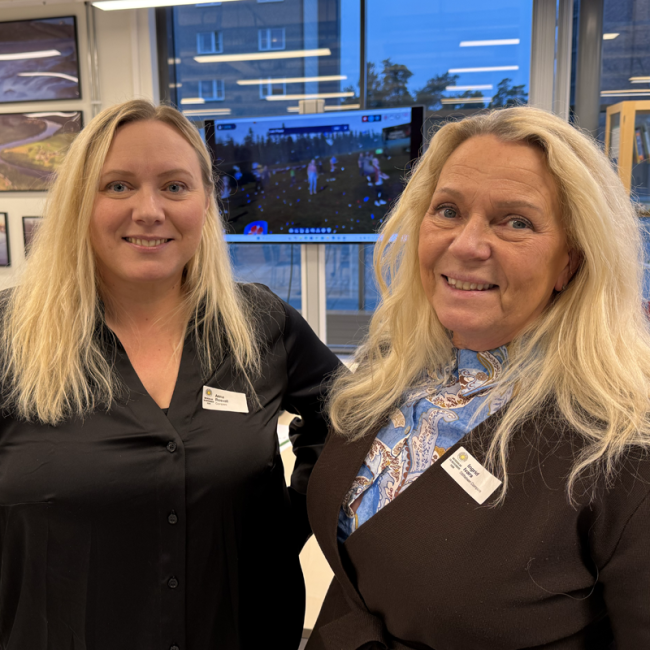
Ingrid Ivars and Anna Rosvall, Innovation Managers at Compare.
What has it been like to take part in the project?
– It has been very interesting, says Ingrid Ivars. It is impressive to see the exercises and games that have been developed, and to know that they are grounded in research. We are good at creating innovations, but it is equally important to ensure that knowledge reaches society. I try to encourage researchers to think like entrepreneurs.
What can the Incredilab project contribute?
– Testing and training are extremely important, and I hope as many people as possible will have the opportunity to try the technology, says Ingrid Ivars. Bringing companies and municipalities together to train and test is highly valuable.
– A common thread throughout Incredilab is the need to practise, and to do so as realistically as possible through different scenarios, says Anna Rosvall. It is both effective and impactful to train collaboration between organisations, municipalities, and countries. Administrative borders certainly do not make life easier during a crisis, but they are boundaries we need to cross.
– Incredilab helps build relationships and broadens perspectives beyond our own organisational contexts. In one of the game scenarios, for example, it turned out to be better to evacuate people to Norway rather than elsewhere in Sweden. Without practising, we would probably never even have considered that option.
How do we move forward now that the project has ended?
– We are currently in the start-up phase of a new initiative with Karlstad University called Regional Arena for Digital Innovation in Testing and Training, says Anna Rosvall. The need for testing and training is central there as well. We want to bring together the capabilities, knowledge, and research environments that exist at Karlstad University and make them visible to businesses and other stakeholders. We want to bridge the gap. As for Incredilab, Compare wants to help identify target groups so that the results do not remain confined to the project itself.
How can Incredilab and its results reach municipalities and other organisations?
– That is a difficult question, says Ingrid Ivars. Everyone is busy with their existing responsibilities, but we are starting to realise that whether it is extreme weather, power outages, or internet disruptions, these issues must be taken seriously. For a long time, our ministers have warned that we live in a constant state of low-intensity crisis, but that can be difficult to grasp when everyday life appears normal.
– Communication is incredibly important, says Anna Rosvall. When we design future projects, communication must play a much larger role than it has previously. Are we trying to reach firefighters, municipal staff, volunteers, or other groups? It is crucial to adapt the language to different target audiences.
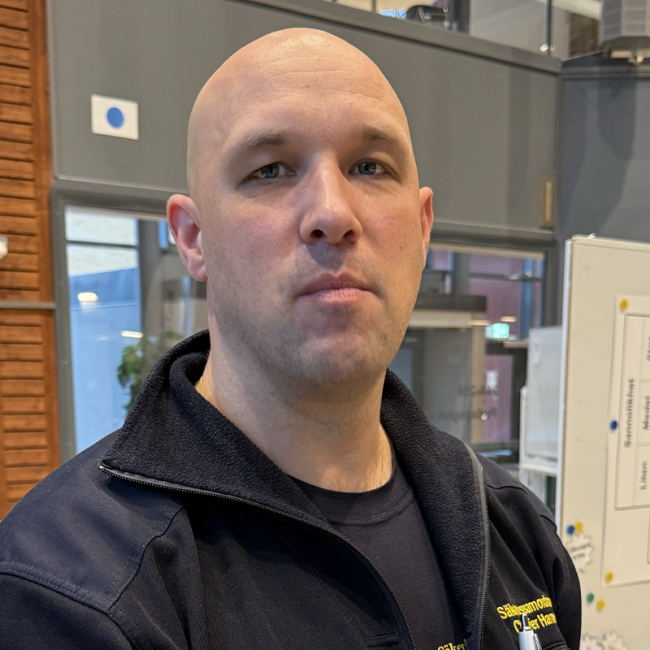
Christoffer Hanell, Security Coordinator for the municipalities of Arvika, Säffle, Eda, and Årjäng.
What does Incredilab contribute for someone in your role?
– It provides inspiration for developing training and educational materials, as well as new methods for conducting exercises. Training helps us overcome the barriers that can arise when a real crisis occurs.
– Meeting in person, building relationships, and carrying out exercises across national borders are important. The project now needs to bring this knowledge to the local level and demonstrate the tools and methods that are available.
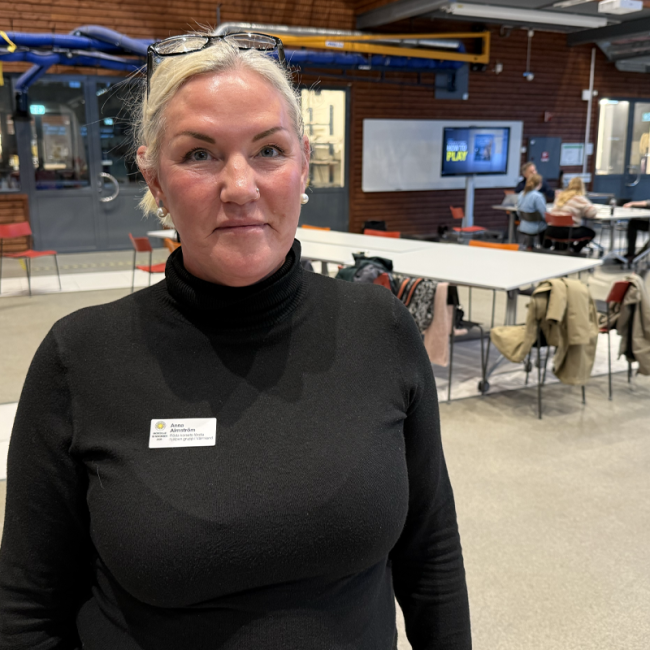
Anna Almström, Red Cross First Aid Group, Värmland.
The Red Cross has shown interest in the card game Let’s Talk About Crisis! Why?
– It seems to be an excellent tool for strengthening our crisis preparedness. We always need to train our preparedness capabilities, and while we already do that, there is always room for improvement. The fact that Let’s Talk About Crisis! comes in a card format and can be used in many different ways makes it easy to bring into meetings without turning training into a major project.
– I have completed incident commander training and practised these kinds of scenarios before, but the visual support offered by the project’s technology is excellent. It makes training more engaging and enjoyable, while also being adaptable to the Red Cross’s own guidelines.