Food packaging is currently one of Europe's most resource-intensive material flows. The SABOR project aims to advance recycling, digital traceability, and circular business models to meet the EU's new requirements.
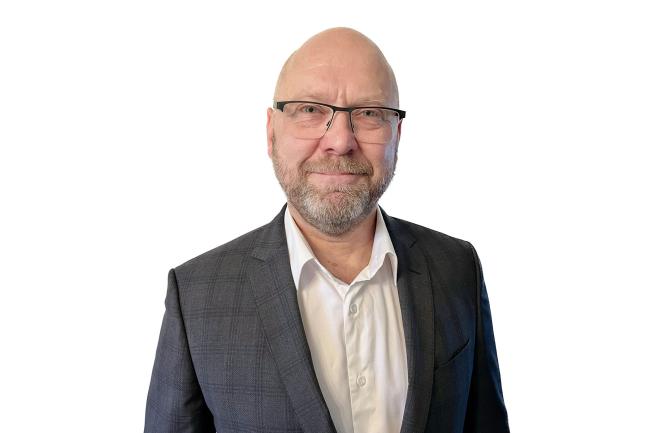
– SABOR is an example of how research, innovation, and industry can work together to support Europe's circular transition, says Mikael Johnson.
The Service Research Center (CTF) is participating in the European project SABOR (Spain, Sweden and the Netherlands Advancing Traceability and Recycling Solutions for Safe Food Packaging). The project brings together eleven universities, research institutes, companies, and cluster organizations from Sweden, Spain, and the Netherlands to develop safer, more traceable, and more circular food packaging solutions.
– The technology often already exists. Our task is to understand how circular solutions can also work in practice, says Mikael Johnson, Senior Lecturer in Business Administration at Karlstad Business School and researcher at CTF.
At Karlstad University, researchers at CTF are responsible for research on circular business models, value creation, market introduction, and collaboration among stakeholders across packaging value chains. Their work aims to ensure that technical innovations are also organizationally and economically sustainable in practice.
– No region can solve the transition on its own. That is why it is valuable to combine experiences from Sweden, Spain, and the Netherlands.
SABOR, CIRIS and Reactivating Values – How They Are Connected
SABOR is part of a broader research initiative at Karlstad University and CTF focused on sustainable and circular transformation.
- SABOR focuses on how circular food packaging can be developed and implemented in practice.
- Reactivating Values explores how values and sustainability ambitions can be mobilized in transformation processes.
- CIRIS examines how regional innovation systems and smart specialization can contribute to sustainable societal transformation.
Together, these projects generate knowledge about technology, value creation, organization, and regional development in the transition to a more circular economy.
The SABOR project runs for 30 months, involves eleven organizations across three European regions, and has a total budget of approximately €1.5 million.