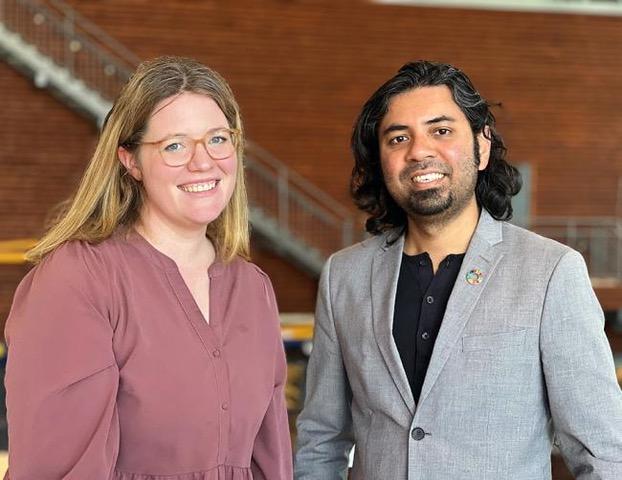
How can young people be encouraged to engage with climate adaptation and sustainability in ways that feel empowering rather than overwhelming? Researchers Caroline Bhowmik and Avit Bhowmik at Karlstad University have been exploring this question through FutureAct, a newly adapted educational game designed to strengthen agency, creativity, and hope among secondary school students.
Designing the Future Under Climate Stress
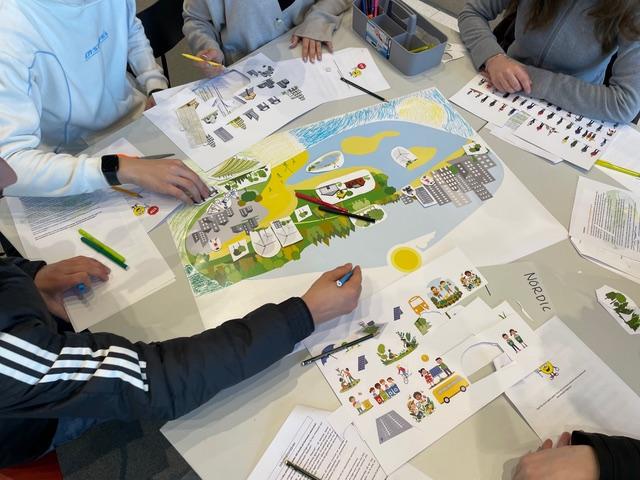
FutureAct builds on Framtidsbilder, a foresight game originally developed by the Swedish Meteorological and Hydrological Institute (SMHI) to support dialogue about climate adaptation and sustainable futures. Researchers Caroline Bhowmik and Avit Bhowmik redesigned the game specifically for younger audiences, creating an interactive experience that combines futures thinking, creativity, and collaborative problem-solving.
The game invites students to imagine life in the year 2075 and to explore how society might respond to challenges related to climate change, technological development, and sustainability. Working in teams, participants develop future scenarios and identify actions that can help create desirable futures. Rather than focusing solely on risks and problems, FutureAct encourages students to think about solutions, opportunities, and their own potential role in shaping change.
From Climate Awareness to Climate Agency
FutureAct was recently piloted during the national technology competition Teknikåttan and has since been tested with more than 200 secondary school students. The activities formed part of an ongoing research effort investigating whether gamification can strengthen young people's sense of agency and hope regarding sustainability challenges.
“Climate and sustainability education often focuses on problems and risks,” says Avit Bhowmik. “FutureAct seeks to complement this by creating space for imagination, collaboration, and constructive action. We want students to see themselves as active participants in shaping the future.”
Initial observations from the pilot activities suggest that the game successfully engaged students in discussions about sustainability, community development, and future societal challenges. Participants demonstrated high levels of creativity and enthusiasm while working together to develop visions for more sustainable and resilient communities.
The project also highlights the growing role of serious games and gamification in sustainability education. By combining play, storytelling, and futures thinking, such approaches can help make complex societal challenges more accessible and meaningful for young people.
For Caroline Bhowmik, the project demonstrates the importance of creating educational environments that foster both critical thinking and optimism.
“We know that many young people are concerned about the future,” she says. “FutureAct provides an opportunity to move beyond concern and focus on possibilities, solutions, and collective action.”
The research team plans to continue evaluating the educational and psychological impacts of the game, with particular attention to how participatory and game-based approaches can support sustainability learning and strengthen young people's confidence in their ability to contribute to societal transformation.
FutureAct was fuded by MIRAI, with financing from STINT to support research collaborations between the member universities in Japan – Nagoya University and Sweden – Jönköping University.