
For several decades, singing and music have occupied a diminishing place in Swedish schools, despite scientific evidence demonstrating numerous health benefits, including reduced stress, increased levels of the “feel-good hormone” oxytocin, and strengthened social cohesion. Against this background, the research project Singing for Health in School – A Matter of Social Concern was launched. But can just fifteen minutes of singing each day at school be enough to help pupils feel better and, ultimately, perform better academically? This is the question the research project set out to investigate.
The project is funded by the Marcus and Amalia Wallenberg Memorial Foundation, with the Royal Swedish Academy of Music acting as fund manager. No previous studies have examined this area, making the project unique, both because of the interdisciplinary combination of expertise represented by the researchers and because of the practical singing intervention at its core, which has the potential to be directly implemented in everyday school teaching.
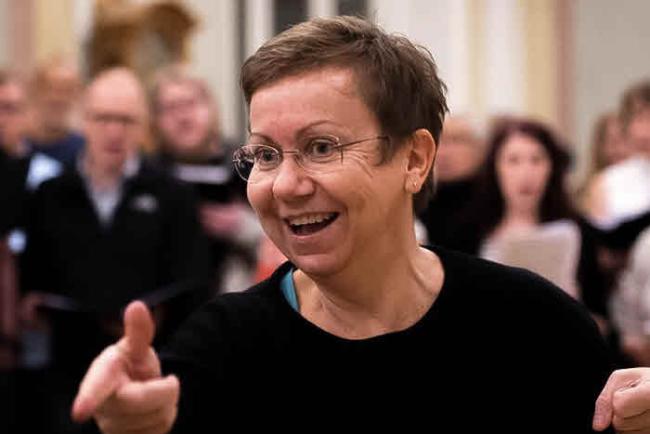
The research team aims to develop an evidence-based teaching model for singing instruction that can be used to provide singing activities for younger primary school pupils, with a focus on classroom calmness, cognitive, linguistic, emotional, and social development. The project is led by Pia Bygdéus, Senior Lecturer in Music Education at Ingesund School of Music, Karlstad University.
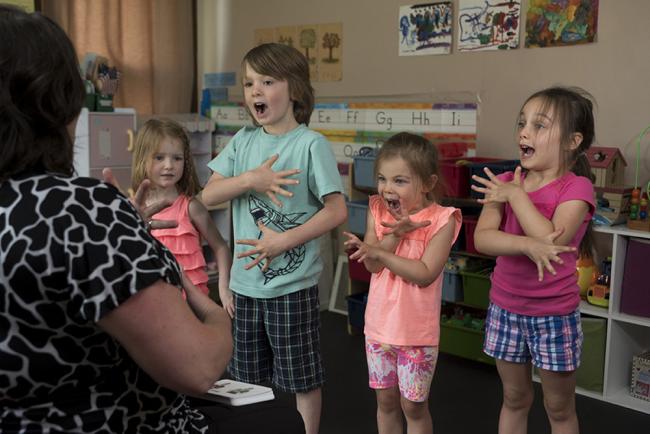
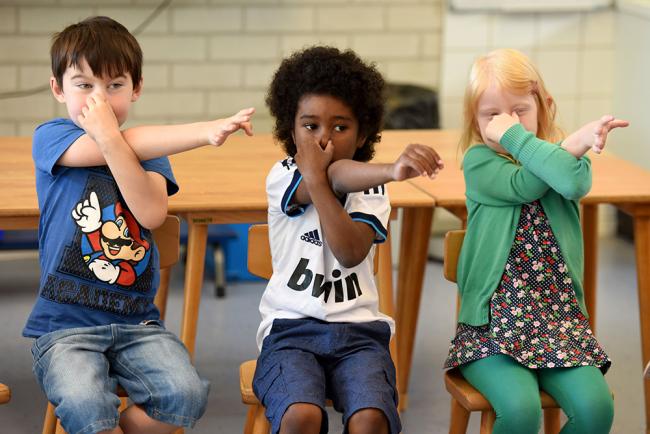
The studies are conducted at the intersection of music and health, music education, speech and language pathology, and psychology, measuring various effects of introducing a daily singing session into pupils’ regular classrooms. A framework and model have been developed in which pupils sing for fifteen minutes a day, four days a week, for five weeks under guided instruction. Through this framework, participating teachers have been provided with various tools and strategies related to implementing the singing model.
What Have the Researchers Found?
“It is much quieter in classrooms today, in the sense that there is far less singing in regular classrooms,” says Pia Bygdéus. Singing and the arts have gradually been pushed away from the center of the curriculum. In addition, we encounter teachers and newly qualified primary school teachers who have not experienced singing and music as a natural part of their own schooling or teacher education. As a result, singing with pupils does not come naturally to them either.
“At the same time, choir singing remains strong in Sweden, with approximately 5–6% of the population still singing in choirs even after the pandemic. However, we may not yet see the full consequences of increased screen use in classrooms. Teachers can now play music and project videos for movement activities, but they may miss the face-to-face interaction that occurs when singing together with pupils. Many teachers have not received sufficient training during their education, do not feel comfortable singing with pupils, and therefore do not make it a natural part of everyday classroom life.”
“Singing contains rhythm, meter, pulse, lyrics, language, opportunities for emotional regulation, and positive contagion effects. Participation has been remarkable throughout the entire project, generating many exciting practice-based outcomes. Without the involvement of schools and participating pupils, this project would not have been possible. Every time I have visited the schools, pupils have enthusiastically and curiously asked, ‘What are we going to do today?’ Time and time again, I have been reminded of how quickly children learn.”
“The project involves 241 pupils in grades 2 and 3. On multiple occasions, they have answered questions about their health, well-being, perception of their own voice, and have completed various assessments conducted by speech and language therapists. All tests were carried out both before and after the five-week singing intervention. The pupils participated in a battery of ten different tests, administered several times during a school term, while also learning approximately ten new songs during the intervention period.”
What Effects Has the Singing Intervention Had?
“The effects are clear and indicate that singing promotes community, health, learning, and language development,” says Bygdéus. The results have been so promising that the Karlstad School of Culture and Arts, in collaboration with Karlstad Municipality, has invited fifteen primary schools and approximately 600 first-grade pupils to participate in daily singing sessions this autumn.
“Those already convinced of the value of singing, such as music teachers and choir conductors, may have known this through experience. However, there is now scientific evidence demonstrating what a fifteen-minute daily singing session can contribute to and develop in schools.”
“The project has also identified a need for teachers to receive better support and tools to feel comfortable using their own bodies and voices and singing together with their pupils. Teacher education in Sweden is currently undergoing revision, a process that will continue through 2027. There is now a strong case for giving artistic subjects a more prominent place within school education.”
Music Education as a Resource for Health and Learning
“Society today signals that young people are experiencing poorer well-being than older generations. Through music from an early age, people develop emotional regulation skills and benefit from positive social influences. We now have evidence showing that singing contributes to pupils’ learning and development in school and, ultimately, to societal development.”
“Children spend a significant portion of their lives in school, where they learn to solve problems, function independently beyond school, and become active contributors to society. We hope that our research will be taken seriously, recognized as important, and help influence future educational policy. This aligns with the United Nations Convention on the Rights of the Child, which became part of Swedish law on January 1, 2020, affirming every child’s right to culture, artistic life, and artistic expression.”
“From this perspective, it is fundamentally a democratic issue for schools to actively engage with artistic subjects. Can we reclaim space for these disciplines? Can we provide young people with greater joy in life through artistic education? How might these subjects stimulate children and young people and, ultimately, contribute to improved PISA results?”
The research project will conclude with a knowledge seminar at Ersta Cultural Venue in Stockholm on October 13. During the event, the research team will present the project’s findings and discuss various aspects of the research alongside invited guests and audience members. The afternoon will conclude with the concert I Was Born with a Tone.
“We are eager to continue studying the effects of our research as it is implemented in classrooms. At the same time, we are currently working on several scientific articles. Two have already been published, four are under review in international academic journals, and three are works in progress. In total, we have nine articles underway, containing a rich body of quantitative and qualitative data collected between 2021 and 2026.”
“We also aim to produce a book to give back to practice, for schools, principals, teachers, teacher education programs, and students. To make this possible, we now need to secure additional external funding.”
Read more about the seminar, which is free of charge but requires advance registration.