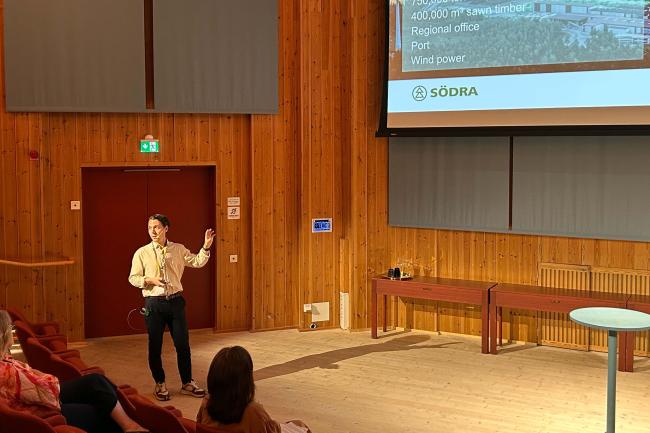
On 16–17 June, researchers, companies and clusters gathered for the BioEco Valley Summit 2026. This year’s theme, lignin, fibres and optimised circular processes, highlighted how the bioeconomy can contribute to the green transition.
The conference was opened by County Governor George Andrén, who emphasised the strong position of Värmland within the forest-based bioeconomy and underlined the importance of collaboration between academia, industry and the public sector in addressing challenges such as climate change.
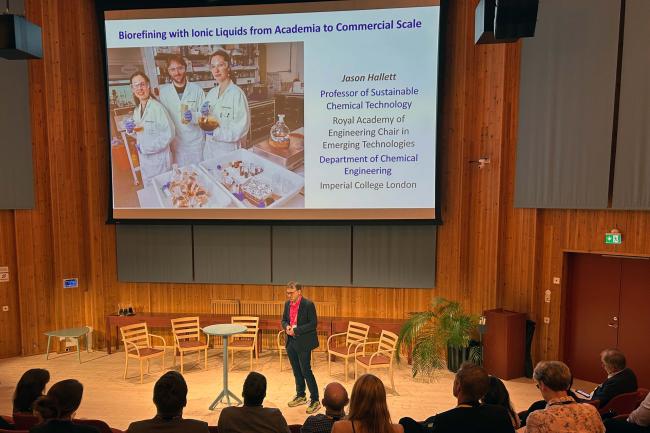
Among the speakers was Jason Hallett, Professor at Imperial College London, who shared experiences of bringing research to market. He stressed that the path from laboratory to commercial application is often longer and more complex than expected, while highlighting the importance of encouraging entrepreneurship within academia.
"The journey is rarely what you expect, but that is precisely why we need more people willing to give it a try", said Jason Hallett.
Canadian CRIBE
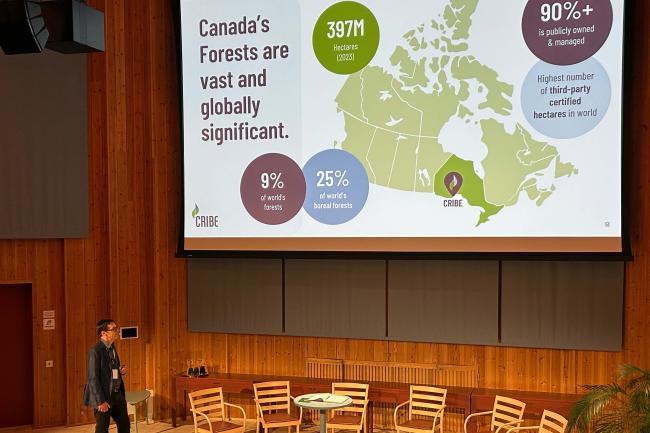
Scott Jackson and Chris Walton from the Canadian organisation CRIBE emphasised the importance of innovation and international collaboration in developing new value chains from biomass. They described how Canada is rich in natural resources, with around 9 per cent of the world’s forests, but is also highly dependent on exports, particularly to the United States.
When markets fluctuate, the need for renewal becomes clear, with new technologies and innovations required to create value from biomass. At the same time, there is a challenge in stimulating innovation within a traditionally conservative industry.
Research Institutes of Sweden (RISE) and lignin
Swedish research and industry were also prominently featured. RISE highlighted the potential to develop new materials and products from lignin. Lignin – often described as the natural binder in wood – can be refined into bio-based products such as aviation fuel or carbon fibre for batteries and gas purification.
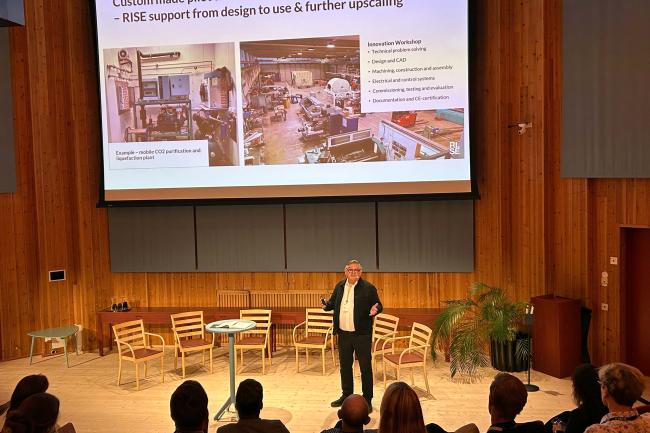
Per Tomani from RISE presented their open testbed LignoCity, the only facility of its kind in the world offering flexible production of lignin qualities at industrial scale.
During the second day of the conference, the focus shifted to the industrial perspective. Södra presented its ambition to become a global leader in the production of lignin from the pulp process, while Valmet pointed out that the technology is now in place – but that making production economically competitive remains a key challenge. The conference also attracted international interest, including participants from the Japanese company Oji Group.
Overall, BioEco Valley Summit 2026 demonstrated the importance of collaboration and innovation in advancing research towards large-scale, competitive solutions.
Pro2BE organised the conference
The conference, which takes place every other year, was organised by the Pro2BE research environment – Processes and Products for a Circular Bioeconomy – at Karlstad University. The conference project leads were Stefan Frodeson, Head of the Department of Engineering and Chemical Sciences, and Salman Raza Naqvi, Associate Professor of Chemical Engineering.