RisCon26 opened on Wednesday at Karlstad University with Kamal Kishore, the United Nations Special Representative for Disaster Risk Reduction, delivering the keynote address.
– This is a very unique conference, he says, expressing great satisfaction with his visit to Karlstad so far.
The visit began on Tuesday when he took part in a risk walk through central Karlstad.
– We were able to see how you are working here on risk reduction, particularly through the river embankments that help protect, among other things, the hospital from flooding. That was very interesting, says Kamal Kishore, who also heads the United Nations Office for Disaster Risk Reduction (UNDRR).
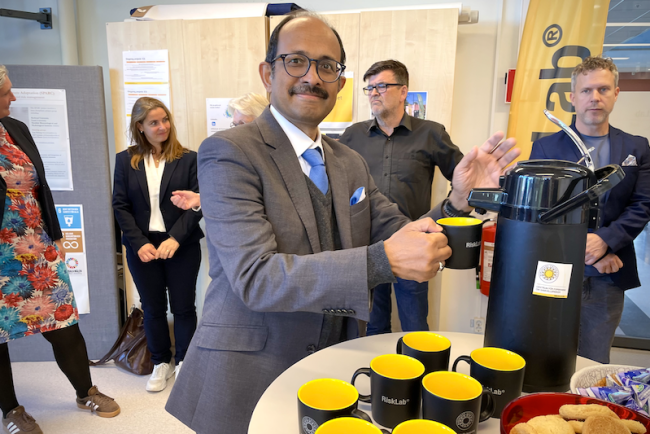
He arrived at Karlstad University on Wednesday morning, where representatives from the Centre for Societal Risk Research (CSR) guided him through the Risklab facilities, including demonstrations of Floodville and Riskköping.
When RisCon26 officially opened after lunch, Kamal Kishore delivered the opening keynote, followed by a panel discussion.
– I spoke about the progress we are making globally in early warning systems. I also discussed the complex challenges we face and the need for international collaboration, says Kamal Kishore, referring to his keynote address, which was titled “Cascading Risks, Emerging Threats, and Interdependencies.”
– This is a very unique conference that brings together expertise from many different fields. We have diplomats, representatives from national authorities, researchers from a range of disciplines, and participants representing international, national and local organisations, says Kamal Kishore, highlighting this diversity of perspectives as one of the conference’s greatest strengths.
According to Johanna Gustavsson, Director of CSR and host of the conference, this was the guiding idea behind RisCon26 from the outset.
– From the very beginning, we wanted to create a meeting place for researchers and practitioners. Research cannot take place solely within the walls of the university. It must engage with stakeholders in society so that it can lead to real change.
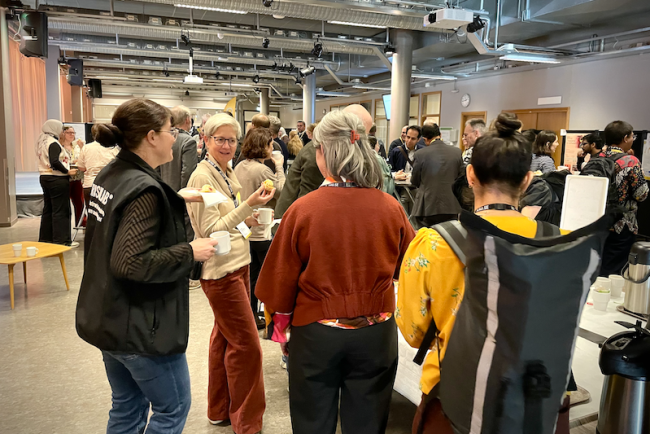
The approximately 100 participants attending the three-day conference are being offered a packed programme.
– One participant said to me, ”Do you realise that the programme runs to eleven pages when printed out?” Johanna Gustavsson says with a smile.
– We are delighted that so many people have chosen to attend and that this important work is now underway. We are also very pleased that Kamal Kishore was able to join us, along with our other keynote speakers on Thursday and Friday.
These speakers are Takako Izumi from Tohoku University, co-chair of the MIRAI collaboration, and crisis management expert Helena Gullberg.
Each of the three conference days has its own overarching theme. Wednesday focuses on “Understanding and Managing Societal Risks”, Thursday on “Climate, Environment and Health”, and Friday on “Preparedness, Response, and Capacity Building.”
In addition to keynote speeches and panel discussions, the conference programme includes workshops, parallel sessions and a poster exhibition.
The full programme is available here: