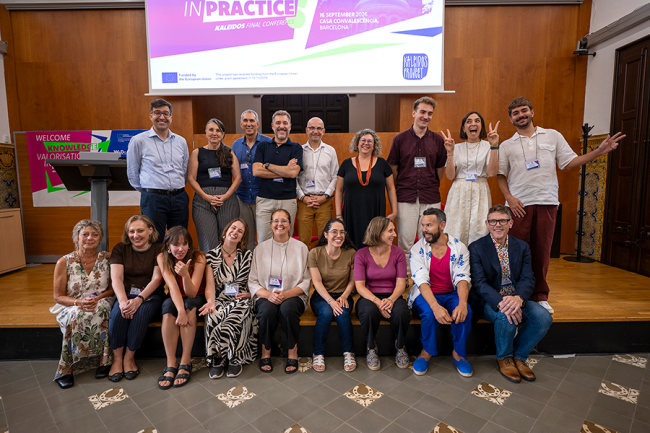
The path from research to real-world application is not always straightforward. The EU-funded Kaleidos project, which ran from February 2024 to July 2026, explored how universities can become better at turning research into benefits for society.
Karlstad University, together with universities in Bologna, Barcelona and Lorraine, has developed new approaches that use research and collaboration to address societal challenges, rather than simply disseminating research findings. An important part of the Kaleidos project has therefore been to take a broader, more holistic view of collaboration, explains Sofia Andersson, Research Adviser at the Grants and Innovation Office.
“Knowledge valorisation is the process of turning research into benefits for society. It involves moving beyond viewing research findings as something to be disseminated or published, and recognising how new forms of collaboration can also help address societal challenges. Universities, businesses, the public sector and civil society need to come together, bringing different perspectives and areas of expertise to the table,” she says.
Project outcomes
The project has resulted in new tools, training programmes and ways of working that are available to researchers.
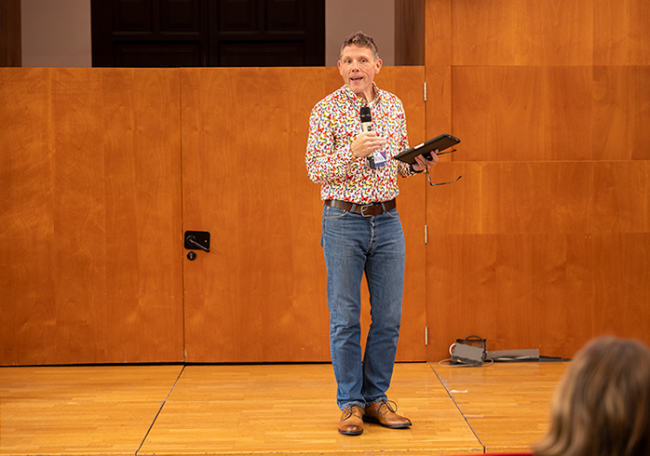
“Kaleidos has developed tools that help universities and research organisations assess how they work to use and disseminate research. The tools highlight what works well and where improvements can be made. The project has also explored the different actors involved in innovation and developed indicators to track the outcomes of research and innovation,” says Èamonn McCallion, Research Adviser at Karlstad University.
Karlstad University has also participated in a network focused on open science, research and research management, where participants can continue to share experiences and learn from one another beyond the end of the project.
The Kaleidos project has now concluded, but the tools, training programmes and approaches developed through the project can be used and further developed by universities and other research organisations. The project has also opened up opportunities for other organisations to test the tools and contribute new insights and experiences.
“For Karlstad University, the project has primarily provided new insights into how research can be more closely connected to society’s needs and how open science can be used as part of that effort,” says Sofia Andersson.