Remote-controlled wheelchairs, three-dimensional digital meetings and robotic control across national borders. Researchers and companies from across Europe have gathered at Karlstad University to explore how 5G and 6G networks could transform the way people connect and interact remotely
The Horizon Europe project 6G-PATH (6G Pilots and Trials Through Europe) aims to develop and evaluate new digital services in areas including healthcare and education.
Three of the project's international trials were recently conducted at Karlstad University, demonstrating how next-generation connectivity could create entirely new opportunities for remote interaction.
Three-Dimensional Digital Meetings
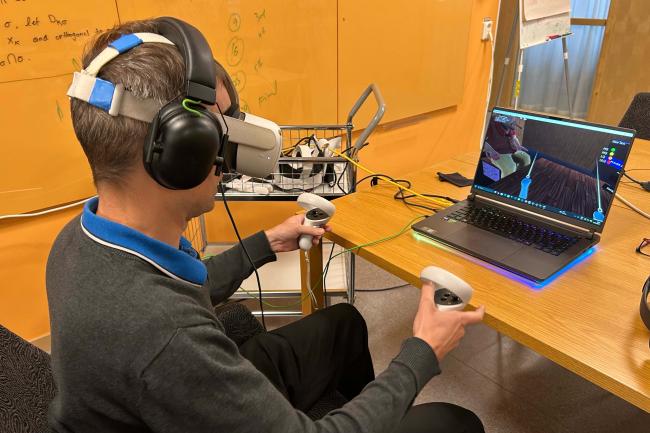
In one of the trials, researchers from the Hungarian research institute HUN-REN TKI and the HAMoQ test platform investigated how future digital meetings could become more natural and immersive.
The technology is based on so-called point cloud video, in which people are represented in three dimensions rather than through traditional video streams. Participants used VR headsets and audio equipment to collaborate on a task while researchers studied their experiences of the technology. The aim is to create a stronger sense of being in the same room, even when participants are located in different places.
The researchers are also exploring how large volumes of data can be transmitted robustly and reliably, even when networks are subject to disruptions. In the longer term, the technology could find applications in everything from education to industrial environments and advanced XR solutions.
Remote-Controlled Wheelchair Could Increase Independence
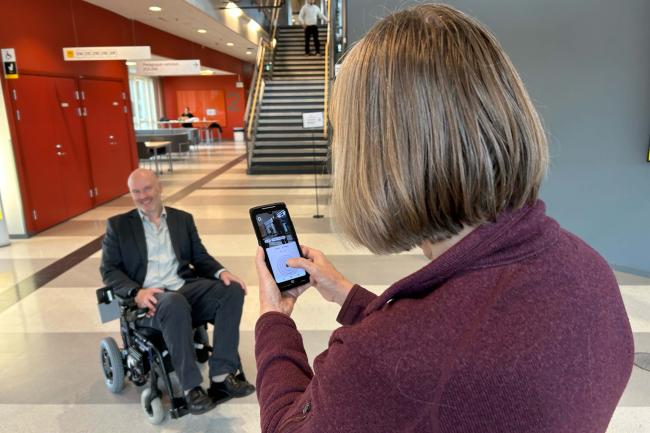
Another trial focused on how 5G connectivity can be used to control assistive devices remotely. The sub-project, led by the Greek company Arx.Net, demonstrated how a wheelchair can be operated over a mobile network using cameras and remote-control technology. The aim is to provide greater independence for people with reduced mobility while also supporting healthcare professionals and family carers.
During the trials, both the user experience and technical performance were evaluated. One possible future application is helping people move around hospitals, care homes and domestic environments without requiring an assistant to be physically present. Representatives from Region Värmland also attended the demonstrations.
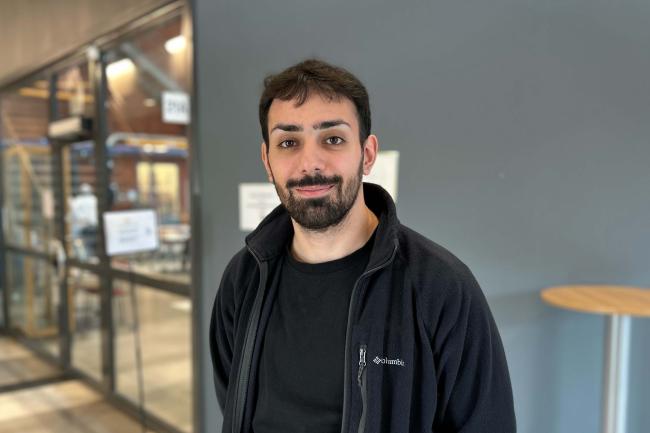
“I hope that, in the future, this technology will contribute to greater freedom and quality of life for users by enabling remote support,” said Miltiadis Papadopoulos, developer at Arx.Net.
Robotic Control and Haptic Feedback Between Sweden and Norway
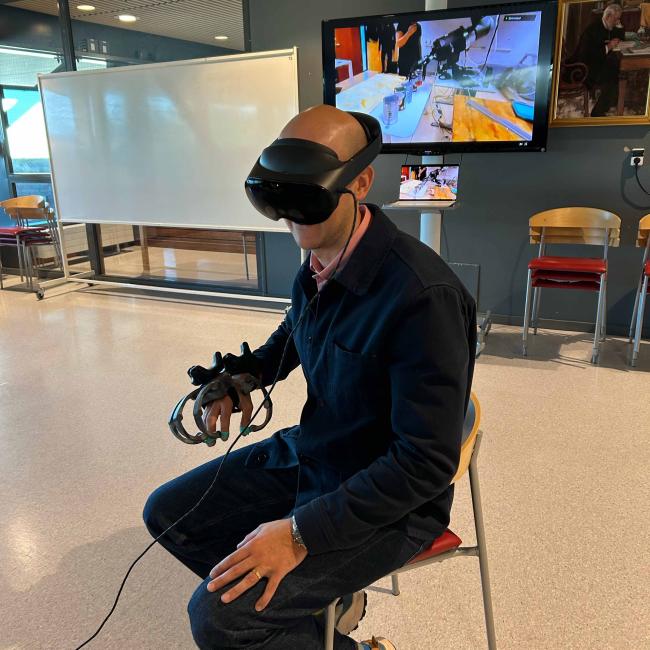
The third trial, MIRAGE, explored how far future technology can take the concept of remote presence. Using a head-mounted display (HMD), haptic gloves supplied by Haptikos, and a robotic hand located at the University of Oslo, participants in Karlstad were able to see, feel and interact with an environment several hundred kilometres away.
A 360-degree camera provided users with a view of the remote surroundings, while the gloves delivered vibrations when the robot came into contact with objects. The technology made it possible to control the robotic hand in Oslo and move objects remotely while experiencing a sense of physical presence.
In other words, participants could see the remote environment, control the robotic interaction and receive tactile feedback from another country through an immersive 5G-enabled solution combining networking, multimedia, robotics and haptics.
“Our primary focus is distance learning and hands-on training, particularly in situations where physical access to classrooms or laboratories is limited. In the longer term, the same concepts could also be relevant in other fields that require advanced remote human interaction, including industry and healthcare,” said Mohammad Rajiulla, Senior Lecturer at Karlstad University.
About 6G-PATH
The 6G-PATH project is funded by the Smart Networks and Services Joint Undertaking (SNS JU) under the European Union's Horizon Europe research and innovation programme.
6G-PATH investigates how future networks can support advanced services that require high reliability, low latency and the transfer of large volumes of data. The project includes use cases in healthcare, education, smart cities and agriculture, bringing together universities, research institutes and companies from across Europe. At Karlstad University, the project is led by Professor Anna Brunström.