Biochar can improve soil quality while also contributing to the transition towards a low-carbon society. But if the benefits are well documented, why is biochar not used more widely? That question lies at the heart of a new research collaboration between Sweden and South Africa, led by Karlstad University.
The project, known as R3Net (Resource Recovery for Rural Economics: Network Establishment for Social Acceptance of Biochar Systems), has received funding through the South Africa-Sweden University Forum (SASUF), an initiative designed to strengthen research collaboration between Swedish and South African universities.
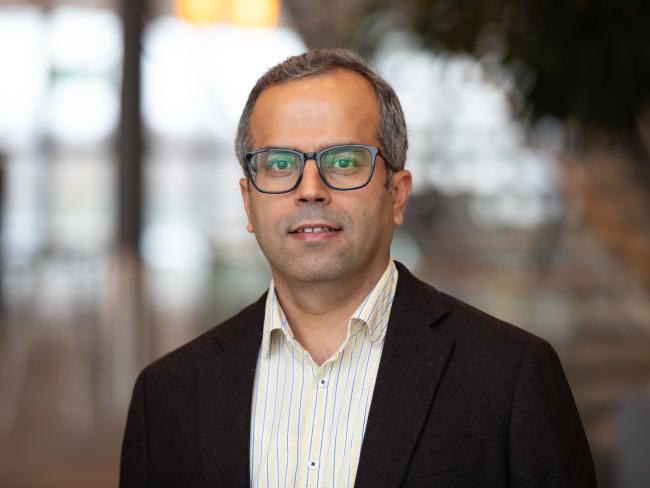
“The aim is to establish a long-term network between researchers, universities and industry in both countries. This is the first step towards larger joint research initiatives,” says Ali Mohammadi, Associate Professor of Environmental and Energy Systems at Karlstad University.
Five Partner Organisations
The consortium consists of five partner organisations: Karlstad University, Luleå University of Technology, two South African universities, and a South African company.
The project has received seed funding of SEK 200,000, shared between the Swedish and South African partners. The goal is to test ideas, build research collaborations, and develop the foundations for future large-scale research proposals.
Research on the Social Aspect of Biochar Use in Agriculture
The project focuses on how agricultural residues in South Africa can be converted into into stable biochar via pyrolysis process—heating organic material in low- or no-oxygen conditions.
Previous research has shown that biochar can improve soil structure and fertility while simultaneously storing carbon for long periods through carbon sequestration process, from the atmosphere.
As part of the project, biochar will be produced from agricultural residues in South Africa and analysed at Karlstad University and Luleå University of Technology. Researchers will investigate its chemical and physical properties to analyse soil application of biochar as well as to develop supply chains in South Africa.
Social Acceptance Is the Key Challenge
Despite its documented benefits, biochar has not achieved the widespread adoption many researchers expected. According to Ali Mohammadi, the main challenge today is not technical.
“We know that it is possible to produce high-quality biochar, and we know that it can benefit agriculture productivity, soil and the climate. The big question is why its use remains limited,” says Ali Mohammadi.
A central part of the project will therefore involve interviewing farmers and other stakeholders in South Africa and running a few social and technical workshops in both countries. The researchers aim to understand current levels of knowledge about biochar, identify perceived barriers to adoption, and explore what factors could encourage wider use.
“The barriers may include economic costs, limited access to information, or uncertainty about the benefits. To increase adoption, we first need to understand the users’ perspectives as a stakeholder in this context,” says Ali Mohammadi.
Important for Future Climate Targets
The research team believes the findings will be relevant far beyond South Africa.
“The issue of social acceptance is not unique to South Africa. It is a global challenge. If we want to improve the application of biochar, we need to understand how people think and what conditions are required for the technology to be accepted,” says Ali Mohammadi.
Biochar is often highlighted as one of the most effective methods for carbon dioxide removal. As a result, the technology could play an important role in achieving national and international climate goals, including Sweden’s target of reaching net-zero greenhouse gas emissions by 2045.
“This is a seed project, but the ambition is for it to become the starting point for a long-term collaboration on sustainable solutions for agriculture, resource management and climate action,” says Ali Mohammadi.
About SASUF
The South Africa-Sweden University Forum (SASUF) is a partnership between 37 Swedish and South African universities that promotes research, education and innovation to address global challenges and contribute to the UN Sustainable Development Goals.
Established in 2017, the strategic internationalisation initiative is now entering its third phase through SASUF+, running from August 2025 to August 2028. SASUF+ has been awarded SEK 13.5 million to support continued collaboration between the two countries.