The new project HiPER-Ni aligns with the global transition to renewable energy by addressing resource scarcity, reducing manufacturing costs, and improving both sustainability and efficiency, according to the Swedish Energy Agency, which is the funder.
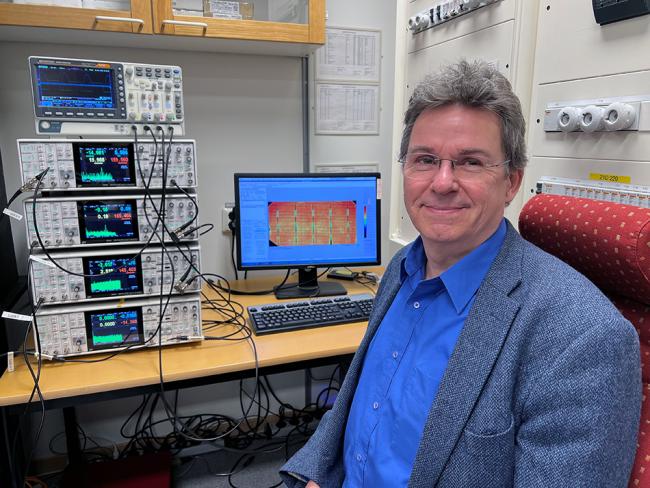
– The project aims to replace costly silver with a new, silver-free metallization based on nickel, says Markus Rinio, Professor of Physics.
As the solar cell industry scales up toward an annual production capacity of 1,000 gigawatts, silver consumption is expected to represent nearly 30 percent of global production, estimated at 30,000 tons per year by 2028.
– This scenario constitutes a significant bottleneck in scaling up solar cell technology, highlighting an urgent need within the industry to find abundant and affordable alternatives to silver in solar cell manufacturing.
The goal of the project is to achieve module efficiencies above 25 percent while at the same time enabling cost-effective and scalable production of solar cell modules. For this purpose, we are collaborating with the company partner Sticky Solar Power AB. Since traditional soldering of this type of solar cells is challenging, we are working together with the company to develop a suitable method for connecting the solar cells within the module.
HiPER-Ni is in line with the global transition to renewable energy by addressing resource scarcity, reducing manufacturing costs, and improving both sustainability and efficiency. The project will contribute to Europe’s energy transition by demonstrating industrial applicability and coordination with national energy goals in Turkey, Germany, Sweden, and Lithuania.
The Swedish Energy Agency’s Motivation for Funding
The Swedish Energy Agency assesses that the project is relevant for the development of future electricity systems, as it is expected to contribute to cost-effective silver-free silicon solar cell modules with high efficiency by replacing silver with nickel. The Agency further notes that the project ranked well in terms of utility, novelty, and implementation in the international evaluation process.
The Swedish Energy Agency has granted a total of just over 7 million SEK to Karlstad University and the company partner Sticky Solar Power AB, with the project period running from December 1, 2025, to November 30, 2028.