Many companies in Sweden and Norway are already testing circular solutions such as take-back systems, repair and reuse, but few succeed in scaling them up. A new project at the Service Research Center (CTF) at Karlstad University will help companies move from pilot initiatives to viable business models.
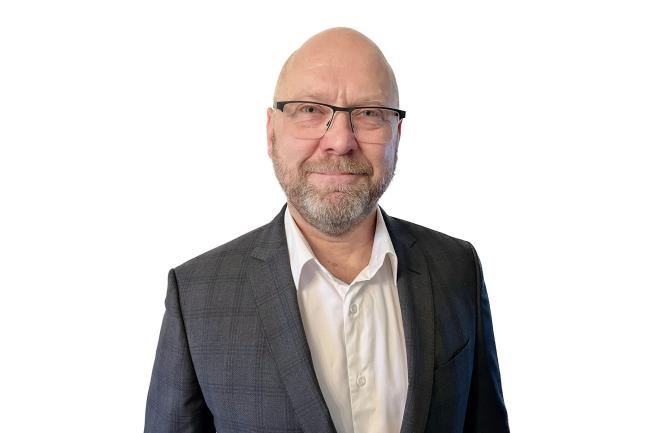
– What is missing today is not technology, but workable business arrangements around it. When several actors need to share data, responsibilities and revenues, uncertainty arises, which prevents initiatives from being taken forward, says Mikael Johnson, senior lecturer and project leader at CTF and Karlstad Business School.
Testing solutions in practice
The project is conducted in collaboration with the research environment CREDS at Inland Norway University of Applied Sciences, together with companies in Sweden and Norway. The work is based on concrete collaborations where the actors jointly identify barriers and test new arrangements in practice.
– Problems often arise at the interfaces between organisations, for example who is responsible for the quality of reused products, how information about materials and usage is shared, and how revenues are distributed, says Mikael Johnson.
– When solutions are to function between companies – and across national borders – it is not enough for each actor to optimise its own part. There is a need for shared approaches to business models, data and responsibilities.
By combining research with close collaboration with industry, the project will develop shared approaches to business logic, data sharing and the distribution of responsibilities. The results will be compiled into practical tools and guidelines that can be used by companies throughout the region.
The aim is to strengthen companies’ competitiveness, contribute to more resilient value chains and accelerate the transition to a circular economy.
The project Reactivating Values – scalable circularity through cross-border collaboration runs from 1 July 2026 to 31 May 2029 and is funded by Interreg Sweden–Norway and Region Värmland, with a total budget of EUR 1,185,189.