Karlstad University is participating in the new EU-funded project SPECTRA, coordinated by Ergang Wang at Chalmers University of Technology. SPECTRA aims to develop new technologies in which solar energy is used to convert plastic waste into valuable resources.
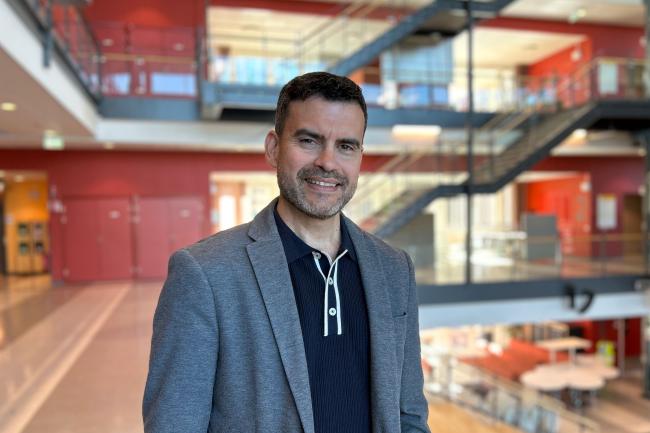
Within the project, Karlstad University will develop computational and AI-assisted tools to accelerate the discovery and optimisation of materials and processes. Moyses Araujo, Professor of Physics, is leading Karlstad University’s part of the project.
“SPECTRA gives us an exciting opportunity to advance our work on using artificial intelligence and computational materials science to accelerate the discovery of sustainable materials. At Karlstad University, we will contribute by developing AI-supported and physics-based computational tools for the design and optimisation of photocatalysts, helping to identify materials that can use different parts of the solar spectrum more efficiently and selectively for plastic waste conversion.” says Moyses Araujo.
The project brings together European expertise in materials design, photocatalysis, optical engineering and reactor technology to address a challenge of major environmental significance.
“For our group, the project strengthens our activities in computational materials science and connects directly to our long-term focus on Energy & Environmental Materials. We hope that our contribution will help shorten the path from fundamental materials discovery to technologies that can turn difficult plastic waste into useful chemical building blocks.” says Moyses Araujo
SPECTRA
Globally, more than 400 tonnes of plastic are produced each year, but only a small proportion is recycled in an effective way. Large volumes of plastic waste are incinerated, landfilled or exported.
The vision of the SPECTRA project (Multispectral Solar Photoreforming Device for Selective Depolymerisation of Mixed Plastics) is to develop a new generation of solar-driven technologies capable of converting difficult-to-handle plastic waste into valuable chemical building blocks for use in manufacturing and industry.
The project faced strong competition during the evaluation process. Out of a total of 667 applications to the EIC Pathfinder programme, only 30 projects were awarded funding. Within the “Waste-to-Value Devices” area, competition was particularly intense, with just 8 out of 247 applications selected.
SPECTRA has been awarded a total of EUR 4 million over a four-year period under the Horizon Europe European Innovation Council Pathfinder Challenge call. Karlstad University has been awarded EUR 565,805.
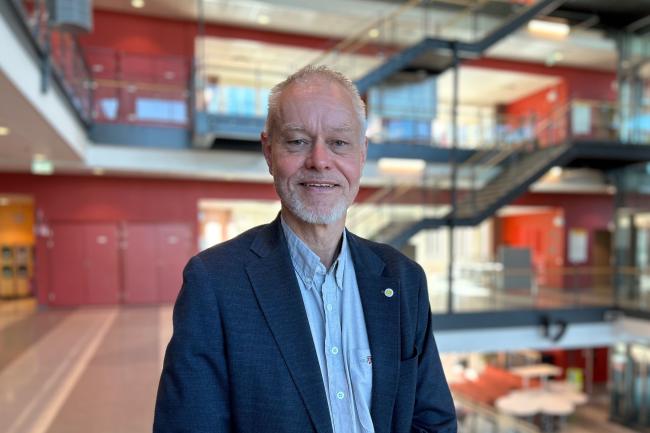
“We are very pleased that this project has been awarded, not only because Karlstad University will contribute to such an important initiative aimed at supporting a future sustainable energy system, but also because it is the first project ever for the University under Pillar Three of the EU’s Horizon research programme,” says Håkan Spjuth, Head of the Grants and Innovation Office.
“The intention of projects within this pillar is to lead to the deployment of new technologies and innovative solutions on the European market in areas identified by the EU as particularly high priority.”
Funding
The project is funded by the European Innovation Council (EIC) and the European Innovation Council and SMEs Executive Agency (EISMEA) under the European Union’s Horizon Europe research and innovation programme, under grant agreement No. 101307317.