Our society has to change. This will require reducing emissions and energy consumption, but also tools to address challenges such as an ageing population and population decline. The conditions for this transition vary from place to place. The importance of place and the question of justice were at the centre of the CRS symposium Everyday Life and Social and Spatial Planning in Transition.
– Transition affects both what everyday life looks like for those living in places particularly impacted by these challenges, and how local authorities plan for future services, welfare and sustainable development, says Moa Tunström, senior lecturer in human geography and director of the Centre for Research on Sustainable Societal Transformation (CRS).
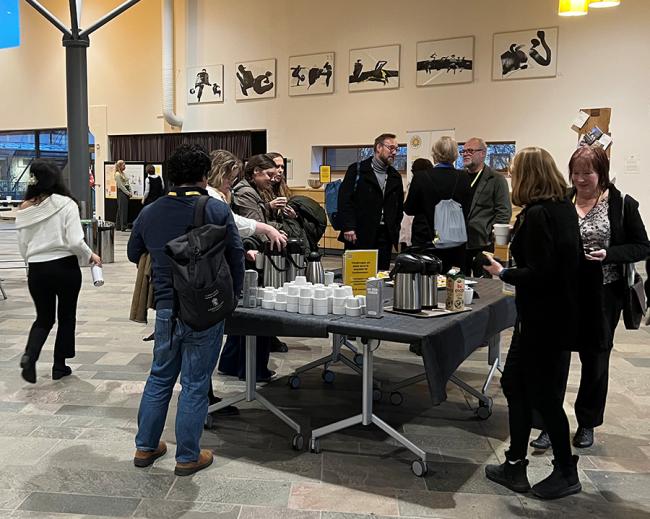
The symposium programme provided perspectives and examples from people’s everyday transition efforts, visions for a transitioned society from a social and spatial planning perspective, and the tensions that may arise in between. The participants and speakers included both researchers and professionals from the region, the county administrative board and other organisations. They contributed their experiences of working with transition and social and spatial planning. Themes included deindustrialisation, small-scale food production, age integration and perspectives of justice.
– For regional planning to be fair, the concepts of distribution, recognition and representation are key, says Tomas Mitander, senior lecturer in political science. Justice has a geography and growth usually has a dominant position in social and spatial planning.
Access to transportation is often an issue that determines the opportunities for development and people’s opportunities for work and education.
– Transport justice, or transport poverty, is crucial to people’s everyday lives and their ability to make a living, says Jessica Berg, senior researcher at the Swedish National Road and Transport Research Institute (VTI). A sustainable transport system is a prerequisite for welfare and its absence often gives a feeling that “we don’t matter”.
Several of the speakers at the symposium emphasised the importance of maintaining a dialogue with the citizens.
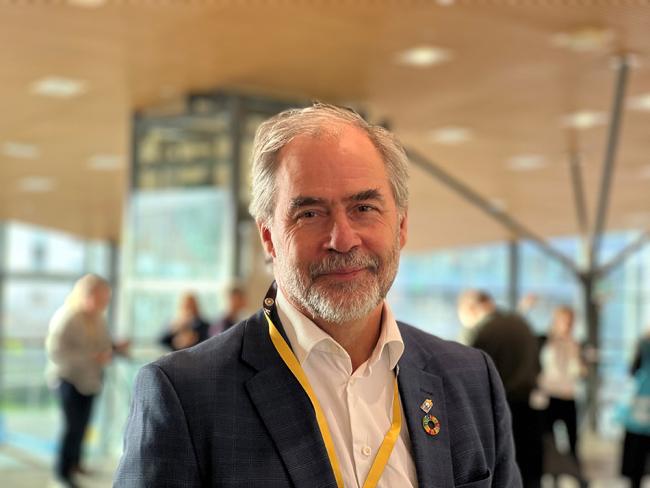
– I deeply appreciate all the meetings where I meet different groups and visit different places in the county, says Georg Andrén, Governor of Värmland, who participated in the closing panel discussion. Through careful consideration, our government agency is there to help create a balanced distribution of value between different interests. It is important to listen, but also to act on what you hear.
The symposium Everyday Life and Community Planning in Transition was organised by the Centre for Research on Sustainable Societal Transformation (CRS), which is a multi- and interdisciplinary research centre at Karlstad University that operates locally, regionally, nationally and internationally with research and collaboration regarding sustainability and societal transformation.
More information about CRS: https://www.kau.se/en/crs