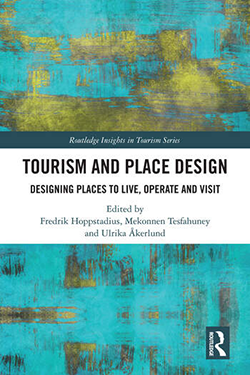
The book “Tourism and Place Design: Designing Places to Live, Operate and Visit” offers new perspectives on tourism and helps advance the field – both theoretically and in practice.
– The book shows new ways of understanding how tourism and places are shaped through their interaction with each other, says Mekonnen Tesfahuney, Professor in Human Geography at Karlstad University and one of the book’s editors.
The book is of great significance for the Tourism and Place Design programme, as it is based on current research conducted at Karlstad University and functions as a kind of “in-house” textbook tailored to the programme.
– Students will work with the content throughout their studies – which connects teaching closely to the research frontier, explains Mekonnen Tesfahuney.
The work on the book has also strengthened collaboration between researchers and teachers at Karlstad University and contributed to a stronger sense of community around the subject.
– Together, the book, the programme, and the research group form a whole that strengthens the profile of tourism and place design – making the programme more attractive, says Mekonnen Tesfahuney. The fact that the book is in English also makes it accessible to international students.
The book is a collaboration among fifteen researchers in tourism studies, human geography, and media and communication studies. The idea emerged in the spring of 2024, and the work developed through a series of seminars where the authors presented and discussed draft chapters. This process functioned as a creative workshop in which ideas were tested and refined collectively.
The book is divided into three parts:
Part 1
Introduces fundamental ideas about tourism and place design. It discusses, among other things, what “design” actually means, how tourists experience the world, and why tourism should be seen as a complex system.
Part 2
Addresses concrete questions about how places are shaped. It emphasizes that places have multiple meanings and that different interests often collide. The authors also highlight the importance of considering not only humans, but also nature and even other species in the design of tourism environments.
Part 3
Focuses on the senses, digitalization, and the future of tourism. How does AI affect the relationship between host and guest? What happens when popularity leads to overtourism? A central question is how to balance making places attractive while also ensuring sustainability.
One of the book’s most important contributions is that it challenges traditional ways of viewing place design.
– Instead of being something planned solely by experts, the tourist is presented as an active co-creator, explains Mekonnen Tesfahuney. Tourists influence how places are experienced and developed – often more than one might think.
The book also introduces the concept of “nomadic place design,” which emphasizes movement, change, and co-creation. In addition, it moves beyond a strictly human-centered perspective and shows how nature, animals, and material objects also play a role in how places are shaped.
– At its core, the book is about something larger than tourism – namely how we create living environments, says Mekonnen Tesfahuney. The places we build and develop reflect who we are – and who we want to be. Do we want to live sustainably? In harmony with nature? Or in other ways?
– Tourism is not isolated from society – it shapes and is shaped by place, says Ulrika Åkerlund, Senior Lecturer in Human Geography and one of the book’s editors. Therefore, we must develop tourism with the long-term well-being of places in focus, and this is central to the book.
The book is unusual in that it also links tourism and place design with more philosophical questions about humanity’s place in the world. This makes it particularly relevant at a time when issues of sustainability, climate, and our impact on the planet are at the forefront.
– The book is intended for students, researchers, and professionals in tourism, urban and destination development, design, and planning – but also for anyone interested in how our places are shaped and transformed, says Mekonnen Tesfahuney.
Book editors
Fredrik Hoppstadius, Senior Lecturer in Human Geography at Karlstad University.
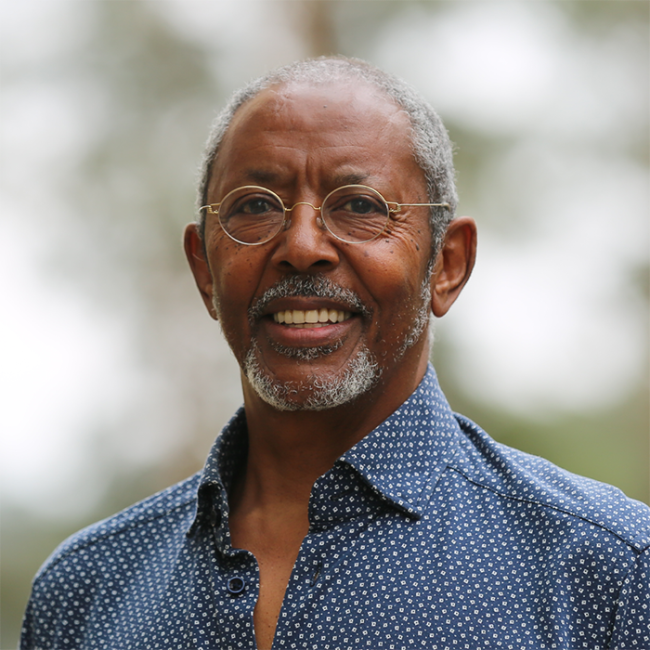
Mekonnen Tesfahuney, Professor in Human Geography at Karlstad University.
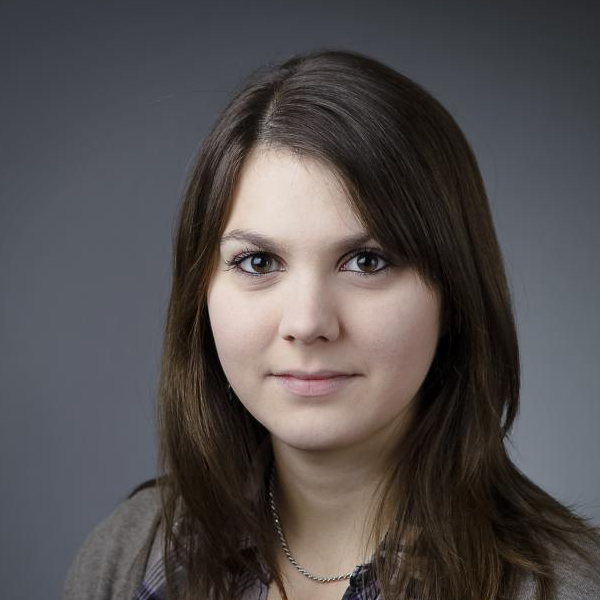
Ulrika Åkerlund, Senior Lecturer in Human Geography at Karlstad University.