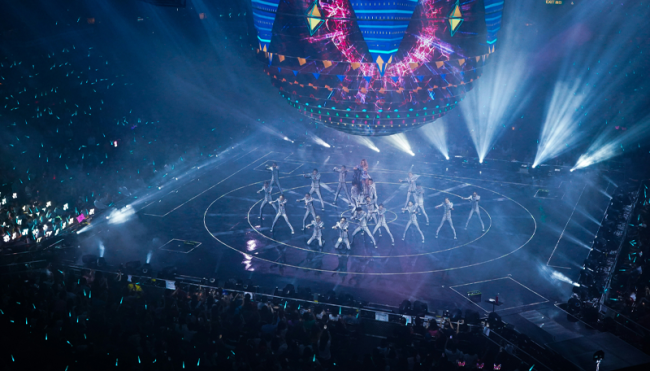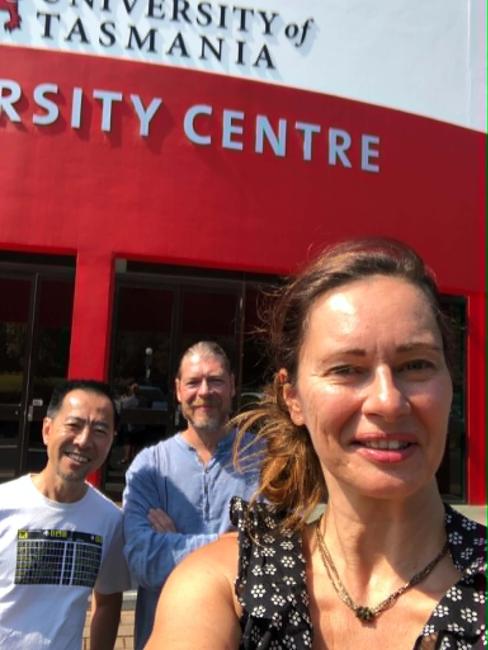
Behind feather boas, kitsch, and spectacle lies one of the most powerful cultural arenas of our time. According to Richard Ek, who is also connected to Centre for Geomedia Studies, Mia Larson, Professor in Business Administration at Karlstad Business School and researcher at the Centre for Service Research (CTF) and Professor Can-Seng Ooi at University of Tasmania, Eurovision uses playful “camp” to push the boundaries of identity, norms, and politics – while appearing to be pure entertainment.
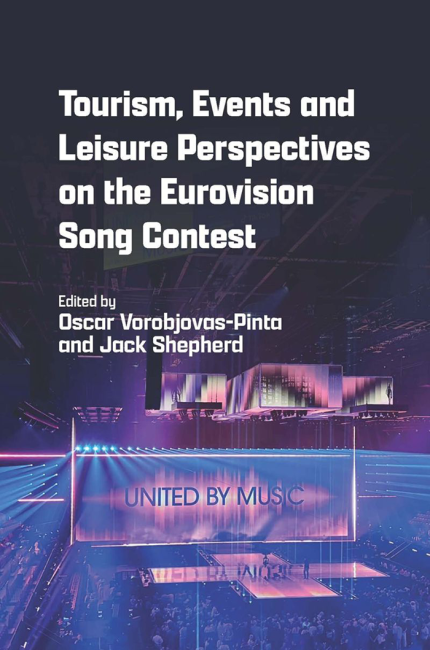
The chapter “Camp and Frivolity as Cultural and Political Transgressions in the Eurovision Song Contest Events,” is a part of the book “Tourism, Events and Leisure Perspectives on the Eurovision Song Contest.”
Why is Eurovision perceived as “silly”?
– Eurovision in the 21st century has increasingly and deliberately embraced being “silly,” flamboyant, and extravagant, explains the writers. It has quite literally “invited play” in both an inclusive and self-ironic way, thereby becoming a mass-media safety valve in everyday life for many people. Of course, there is also a group in society that truly sees Eurovision as nonsense, because they do not want to, dare to, or are unable to be silly themselves.
Is Eurovision actually more serious than we think?
– Yes, because while it may appear “silly” on the surface, it challenges identity-political boundaries related to gender, ethnicity, and sexuality. Since it does so in a “playful” way, it becomes more difficult for conservative groups to respond (other than dismissing Eurovision as nonsense – and at the same time appearing “boring”). Eurovision’s mass-media reach gives these seemingly “frivolous” challenges a substantive power that “authority” finds difficult to handle – much like the traditional court jester who could mock the king without punishment.
What does “camp” imply– and why does Eurovision love it?
– In the chapter, we draw on the American literary critic Susan Sontag’s definition, where camp is a specific aesthetic sensibility in relation to the world that embraces exaggeration, extravagance, and theatricality. From this perspective, camp is often expressed through the staging of disorder and playful excess, and is therefore most closely associated with the artistic world (for example, 1970s glam rock). Eurovision has always been camp, but during the 2000s the organization explicitly chose to adopt a conscious “camp attitude,” and in doing so connected with identity-political movements such as LGBTQIA+ communities. Organizers realized that the concept of “extravagant chaos” within a highly controlled event was exactly what audiences wanted. Camp as a business idea, quite simply.
How can glitter, drag, and kitsch become a political language?
– Since Sontag viewed camp as apolitical, we also use the conceptual framework provided by the Russian literary historian Mikhail Bakhtin. Moral and identity-political transgressions are encompassed within the carnivalesque and expressed through camp (glittery, kitschy, excessive, extravagant), but this does not make them any less political or challenging to the prevailing order. Transgression itself becomes political, because boundaries in society are political. When conservative forces seek to clarify and reinforce boundaries (between “us” and “them,” man and woman, etc.), Eurovision’s boundary-crossing message of multicultural community and solidarity – packaged in glitter, drag, and kitsch – becomes directly political.
Why are there always controversies surrounding Eurovision?
– On a more “surface” level, controversies are constructed because mass media wants them; they are part of the commercial logic of headlines or clickbait – to amplify and disseminate minor conflicts to the public. But on a “deeper” level, controversies arise precisely because the carnivalesque event, albeit playfully, challenges geographical, moral, ethnic, cultural, and sometimes religious boundaries – and, ultimately, the beliefs of social and political groups about how the world is or should be.
Where is the line for what is “too political” in Eurovision—and who draws it?
– Eurovision is a paradoxical event, as it presents itself as apolitical while being political “to the core.” It cannot be anything other than political, because it is based on the fundamental boundary that it is a European event (where both geographical and cultural boundaries are political). It becomes “too political” when those boundaries are questioned, at which point the European Broadcasting Union – the alliance of public service broadcasters that organizes the contest – draws the line. The permissive treatment of Israel in recent years is perhaps the clearest example. Israel is not located in Europe but is considered part of European culture and is not excluded despite its blatant war crimes.