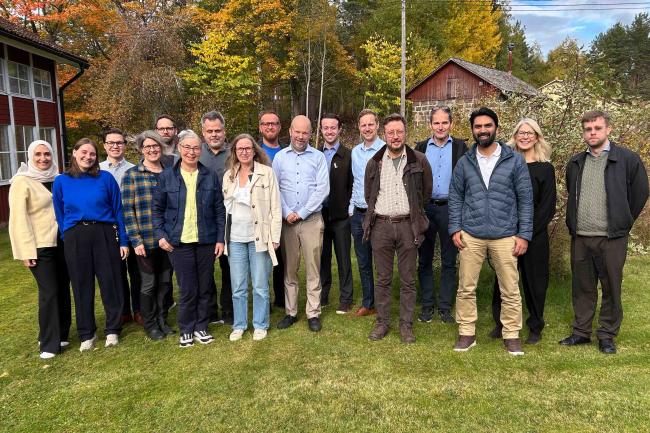
Cleaner process air, efficient energy use, and clothing made from recycled textile waste were among the topics in focus when the EXACT Industrial Research School brought together PhD candidates and industry partners for its autumn meeting at Gammelkroppa Forest School on 30 September.
During the autumn meeting, doctoral students presented their ongoing research projects, while industry representatives provided insights into current challenges and development needs within their sectors. Participating companies included Absolent, Thermia, Blue Ocean Closures, Lixea, Nordic Paper, Rottneros and Circulose.
A common theme throughout the day was the transition towards a more sustainable and resource-efficient industry.
From Cleaner Air to Smarter Energy Use
Doctoral student Erik Matteusson presented his work in collaboration with Absolent, focusing on the efficient filtration of industrial process air. His research examines how to capture the tiny oil droplets dispersed into the air when oil is used as a coolant in metalworking processes.
“Oil filters are important for improving air quality for people working in this type of industry,” said Erik Matteusson.
Energy-related challenges were also high on the agenda. Manal Rahal presented her project with Thermia, which aims to develop smarter control systems for domestic hot water production. Today, water is often heated continuously, even when no one is at home.
“By adapting heating to users’ actual needs, energy consumption could be reduced by up to 20 per cent,” said Manal Rahal.
Paper Instead of Plastic
Another research project is being carried out in collaboration with Blue Ocean Closures, a company developing fibre-based caps and closures as an alternative to plastic caps.
Doctoral student Fredrik Andersson is investigating how paperboard materials can be heated and formed into durable closures. The research focuses on factors such as the material’s elasticity, strength, and how these properties change during the manufacturing process.
The goal is to create packaging solutions based on renewable raw materials.
Turning Textile Waste into New Products
Circulose presented its technology for recycling textile waste. By using cotton and other cellulose-rich textiles, such as worn-out jeans, the company produces dissolving pulp that can be used to manufacture new textile fibres. The process creates a circular value chain in which end-of-life textiles become raw materials for new products.
Lixea is also working to replace fossil-based raw materials. By fractionating biomass from sources such as agriculture, different components can be recovered and used to produce new chemicals, packaging materials, batteries and textile products.
Sustainable Materials in Focus
During the day, Nordic Paper and Rottneros also presented their operations and collaborations with the research school.
Nordic Paper develops speciality papers and naturally grease-resistant paper products that can replace fossil-based materials in applications such as baking paper, muffin cases and various types of packaging. The continuing growth of e-commerce was highlighted as an important driver behind the need for new sustainable packaging solutions.
Rottneros presented its production of mechanical and chemical pulp, as well as its work on traceability and sustainable forestry. The company supplies pulp to customers around the world, with long Nordic fibres being particularly sought after.
A Meeting Place for Research and Industry
The EXACT Industrial Research School is built on close collaboration between academia and industry. The autumn meeting gave doctoral students the opportunity to present their research findings, discuss challenges with company representatives, and gain insights into how their work can contribute to the transition towards a more sustainable industry.
The event demonstrated the breadth of research within the school, ranging from energy efficiency and air quality to circular material flows and the fibre-based products of the future.