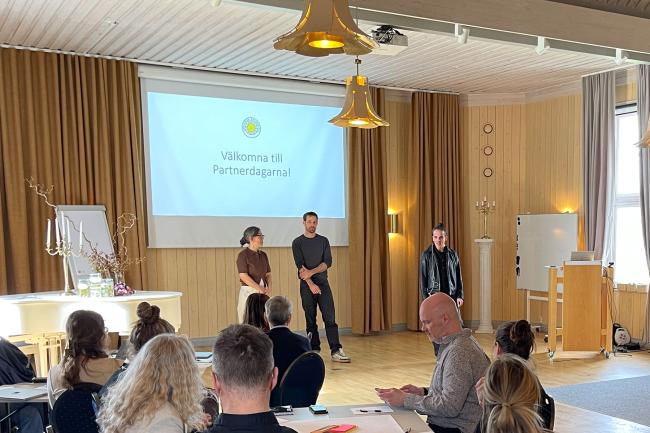
On April 14–15, DHINO hosted the annual Partner Days, bringing together around 30 representatives from academia, the public sector, and industry to exchange experiences and discuss the development of digital health innovation in healthcare.
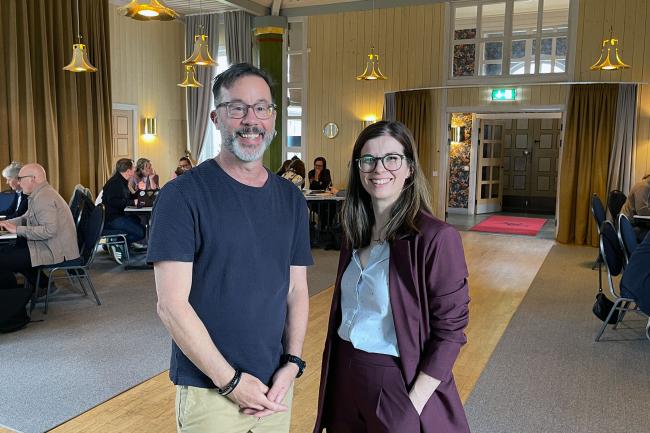
“The Partner Days are a recurring activity where we invite our collaboration partners to share good practices,” says Charlotte Bäccman, project manager for DHINO and associate professor of Psychology at Karlstad University.
Jakob Trischler, deputy project manager and associate professor of Business Administration, continues:
“It is unique to bring together so many different areas of expertise in one place. This type of collaboration is essential for addressing complex societal challenges related to digital health innovation”.
The first day of the programme included presentations and workshops on themes such as cost–benefit analysis, public procurement, digitalisation in diabetes care.
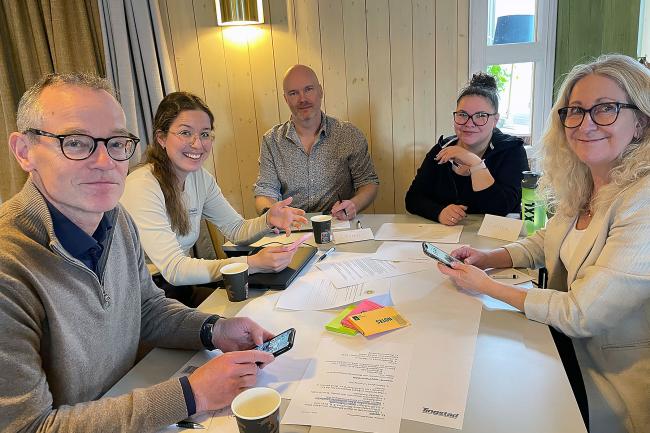
Erik Wästlund and Jana Huck, both researchers at Karlstad University, presented the EU‑funded project DigiH4A (Digital Health for All) and led a workshop where participants had the opportunity to test a new cost–benefit assessment tool for digital health solutions.
“This was both the first test conducted together with the public sector and the first from a multi‑stakeholder perspective,” the researchers explain. “We are keen to see how the tool is received and look forward to feedback that can provide valuable insights for its further development.”
Thomas Wernerheim, development and innovation strategist at Karlstad Municipality, presented the work on Thingwalla and the development of a marketplace for digital public services.
Peter Adolfsson, senior consultant at Högsbo Hospital in Gothenburg, shared experiences from the digitalisation of diabetes care, highlighting how improved use of data can contribute to more efficient care and reduced patient suffering.
The second day featured further presentations, including contributions from a research programme on digitalisation and health sciences at the University of Gävle, as well as sessions on digital competence in healthcare with researchers Anna Nordin and Karin Ängeby at Karlstad University and Maria Sahlin, head of women’s health services, at Region Värmland.
The Partner Days also provided opportunities for networking and joint reflection on how future work within DHINO can be developed and which issues should be prioritised going forward.
“Dialogue with our partners is central as we shape the next steps and define future priority areas,” concludes Charlotte Bäccman.