How can we ensure that a 3D-printed prosthetic limb can withstand the complex loads encountered in everyday life? This is a question that researchers from France and Karlstad University are now working together to answer.
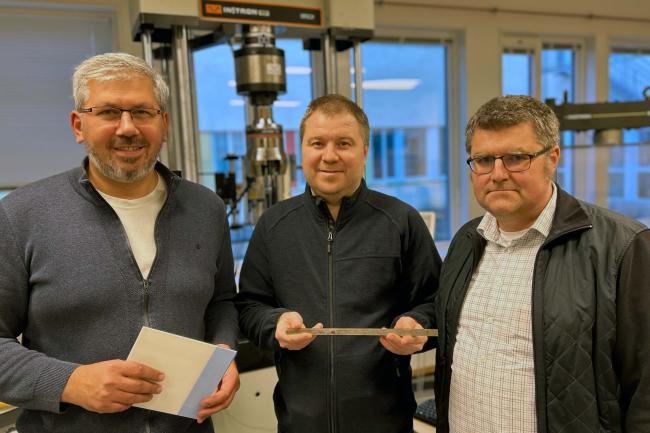
Associate Professor Dmytro Vasiukov, originally from Ukraine and currently based at Institut Mines-Télécom in France, is visiting Karlstad University as part of the MORPH project, in which Associate Professors Anton Tkachuk and Anders Biel, both from the Department of Mechanical and Materials Engineering at Karlstad University, are involved. The project focuses on investigating how 3D-printed composite materials used in prostheses for people with limb loss respond to different types of mechanical loading.
“Modern prosthetic devices are subjected to highly complex forces. When a person walks, runs or twists their leg, combinations of compression, torsion and shear loads arise. To develop safer and more durable prosthetic solutions, we need to understand exactly how these materials behave and when they are at risk of failure,” says Dmytro Vasiukov.
Unique Testing at Karlstad University
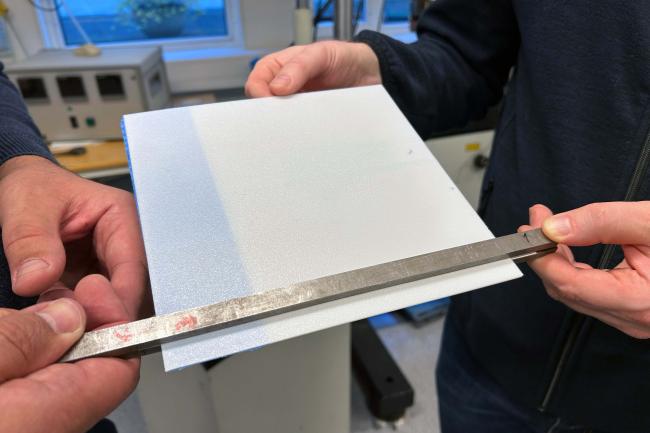
A key component of the project is the experimental work being conducted at Karlstad University. The researchers are using a testing method that makes it possible to study crack initiation and material failure under load in a stable and controlled manner.
The method has previously been used to investigate materials such as paper and adhesive joints, but it will now be applied for the first time to analyse 3D-printed materials of the kind used in prosthetic sockets, the part of a prosthesis that connects to the user’s residual limb.
“There is still a lack of standardised testing methods for this type of material. That makes these studies particularly valuable, as they will generate new knowledge about the strength and durability of the materials,” says Associate Professor Anders Biel of Mechanical and Materials Engineering at Karlstad University.
Research with Importance for Ukraine
For Dmytro Vasiukov and Anton Tkachuk, the project also has a personal dimension, as both originally come from Ukraine. The war has left many people with severe injuries and amputations, increasing the need for advanced and accessible prosthetic solutions.
“As researchers, we want to contribute to society. The development of better prosthetic devices is an area where our research can make a real difference. Given the situation in Ukraine, it feels especially meaningful to work on challenges that can improve people’s quality of life and mobility,” says Anton Tkachuk.
The collaboration builds on long-standing academic relationships. Through the project, expertise in materials engineering, mechanics and testing is being brought together to develop the next generation of durable and reliable prosthetic materials.
The project is funded by the Swedish–French Research Association (AFSR), which has supported research collaborations between France and Sweden since 1976.