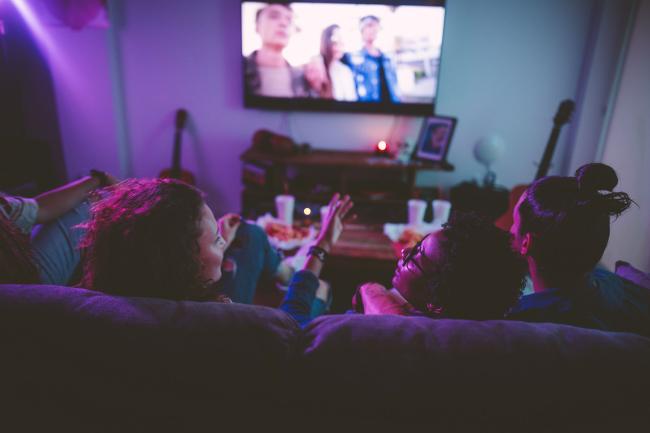
Screen time is often associated with concerns about declining reading habits and lower educational attainment. A new doctoral thesis by Sofia Oldin Cederwall, new PhD in Comparative Literature at Karlstad University, shows that upper secondary school students who watch television series are doing more than simply consuming entertainment. They analyse narratives, interpret characters, and engage in sophisticated discussions about plot and storytelling.
In her thesis, Sofia Oldin Cederwall examined how upper secondary school students discuss and interpret television series such as Breaking Bad, Euphoria, Friends, Gossip Girl and Stranger Things. The study shows that watching television series is not only a form of entertainment, but also involves interpreting narratives, understanding characters, and analysing plots and themes.
The findings show that many young people actively analyse and discuss stories while watching television series. They use a range of strategies to understand and interpret fiction, revealing a capacity to understand and interpret fictional narratives, a competence referred to as fictional literacy.
“My study shows that young television viewers are highly skilled interpreters of fiction in several ways. For example, they are able to distinguish between main plots and subplots and recognise the effects that flashbacks and backstories can have within a television series.”
Sofia Oldin Cederwall worked as a teacher of Swedish at upper secondary level for more than twenty years and observed a strong interest in television series as a form of fiction among her students.
“I became curious about what it actually means to watch television series in one’s spare time and wanted to investigate this more closely. I hope that my thesis can help to provide a more nuanced understanding of young people as screen users,” says Sofia Oldin Cederwall.