
DAMI4.0
Research Center for Digital Adaptive Manufacturing for Industry 4.0

News
-
2026-10-21
Resilience in Focus as DAMI Brings Together Industry and Research
On 20 October, representatives from industry, business and academia came together for a day dedicated to the theme of resilience. How can companies and organisations build resilience in a time marked by geopolitical uncertainty, climate-related challenges and disruptions to global supply chains?
The day began with a welcome address from Anna Ericson Öberg, Director of DAMI, who emphasised the importance of collaboration in addressing the challenges of the future.
“I hope we will have a rewarding day together and leave here with renewed energy and new ideas,” said Anna Ericson Öberg.
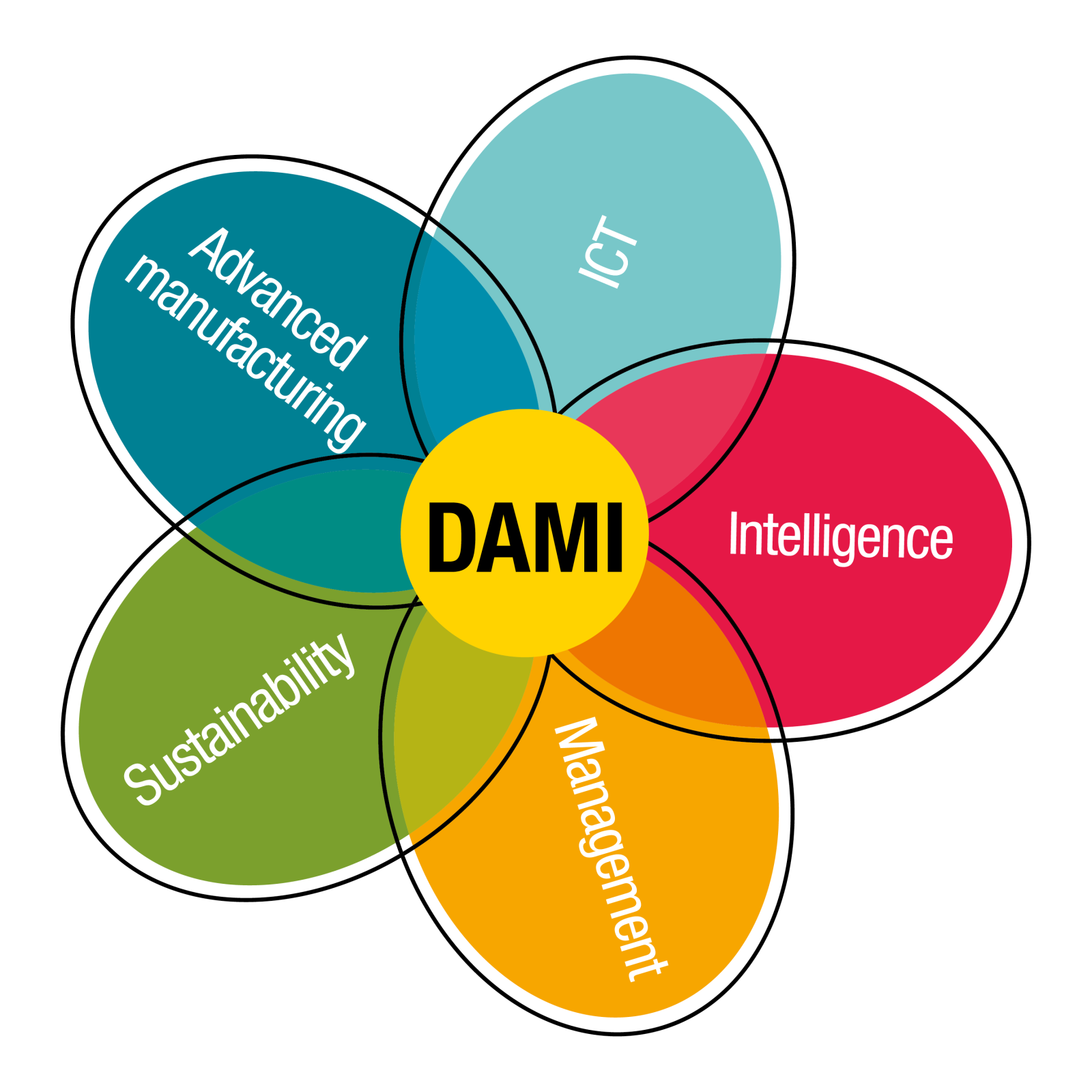
She described DAMI as an interdisciplinary research centre that creates meeting places where research, knowledge and networks contribute to strengthening business development and competitiveness.
-
2026-10-09
DRIVE Brought Together Researchers and Doctoral Students for Annual Workshop
On 6-7 October, researchers, doctoral students and collaborative partners gathered at Karlstad University for the annual DRIVE workshop. This year's event also marked the conclusion of DRIVE's first project phase and featured presentations of current research in future networks, communications and digital infrastructure.
The programme included presentations of research findings in areas such as network security, energy-efficient packet processing, network latency, resilient service placement across edge and cloud environments, and performance in satellite-based communication systems. Participants also took part in a poster and demonstration session, where doctoral students and researchers showcased ongoing projects and advanced 5G and 6G applications.
-
2026-09-08
Collaboration in Focus as the Knowledge Foundation Visits Karlstad University
On 7 September, representatives from the Knowledge Foundation (KK-stiftelsen) visited Karlstad University to gain deeper insight into how the university collaborates with industry in research and education. During the visit, several projects were presented in which the university and companies work together to develop new knowledge and strengthen Sweden’s competitiveness.
Throughout the day, the representatives from the Knowledge Foundation met researchers and academic staff from the Pro2Be research environment and the Department of Computer Science. The aim was to gain a better understanding of how the university works with research, education and skills development in partnership with companies and organisations.
-
2026-06-22
Testing the future of healthcare education through simulation technology
Recently, two successful trials were conducted within the 6G-PATH research project, where nursing students and ambulance personnel tested a new form of remote healthcare education.
The aim was to investigate how next-generation communication technologies such as 5G, future 6G networks, edge computing, and cloud services can be used to create realistic and accessible learning environments for healthcare professionals.
-
2026-06-09
Karlstad University part of Electrified Flexible Industry
Three units at Karlstad University – Electrical Engineering, DAMI and Computer Science – are part of the large-scale project Electrified Flexible Industry. The aim of the project is to develop solutions for a more flexible, resilient, digital and resource-efficient energy system.
Karlstad University’s role in the project is to develop AI-based solutions to enable companies to anticipate energy demand, prices and flexibility opportunities. This, in turn, will help companies reduce costs while contributing to a more sustainable energy system.
“We will combine AI with energy data to enable smarter decision-making around energy utilization,” says Andreas Theocharis, Associate Professor in Electrical Engineering and project leader for Karlstad University’s contribution to Electrified Flexible Industry.
-
2026-06-03
Kick-off for the PIONEERS-6G project
The EU-funded project PIONEERS-6G (Platform and Device Innovations for Energy-Efficient, Resilient, and Secure 6G IoT Systems), coordinated by Karlstad University, has officially kicked off.
Over two days, all project partners gathered at Karlstad University to establish the framework for the work ahead.