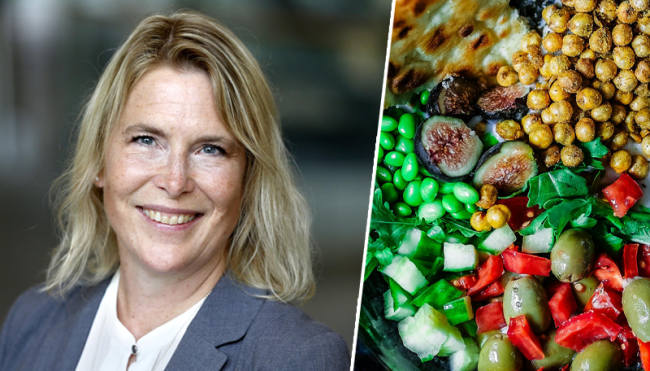

– The kitchen staff are leading the way in listening, challenging, and developing meals in a more sustainable direction, and they’re doing it together with the students, who agree, says Helén Williams, researcher at the Service Research Center (CTF).
Reports on climate change and the resulting pressure on food production are becoming increasingly frequent. A transformation of food production and consumption is needed to handle the crises ahead. The fact that we need more sustainable meals and reduced food waste is hardly news to anyone.
– School lunch is more than just a meal – it is one of the most important moments of the day for both well-being and learning, says Helén Williams. It should be completely natural to protect and develop the meal to contribute to the resilience society needs.
At three municipal upper secondary schools in Karlstad Municipality, efforts are underway to be the positive force needed for a transition to more sustainable meals. A study from the Service Research Center (CTF) at Karlstad University, conducted within the project Värmlandsmat – the sustainable meal, shows that they are well on their way.
– The study, presented at the Industry Day for the Värmland Food Chain on March 25, 2026, in Karlstad, includes over 60 interviews with students, a workshop, observations in school settings, and in-depth interviews with kitchen staff, says Helén Williams. The results show that students place great value on the school meal – both as a source of energy and as a social meeting place. ”Lunch is the highlight of the day” was a recurring comment.
Students want to take responsibility – but ask for even more support to reduce food waste
– The conversations show that students are self-critical regarding food waste and that they too often take more food than they can finish, says Helén Williams. Reasons for food waste can also include uncertainty about new dishes. At the same time, the students express a clear desire to improve and appreciate the school’s initiatives to highlight food waste.
– Karlstad Municipality is very good at offering a wide variety of vegetarian options, and the students appreciate having those choices, says Helén Williams. The municipality is also strong in testing new ways to present nutritious and more sustainable alternatives.
Kitchen staff create a pleasant atmosphere and drive sustainability work forward
The staff’s commitment is highlighted as a crucial factor for the positive development. Students describe the kitchen team as knowledgeable, cheerful, and caring. For the staff, the goal is clear: students should want to come eat – to feel good and have the energy for the school day.
The kitchens work actively with sustainability by offering many choices, investing in more vegetables, selecting organic and regionally produced ingredients, and reducing food waste both in the kitchen and in the serving area. They also participate in product development with local producers to strengthen regional resilience.
The way forward: Care as a driving force in the food system
– Our conclusion is that a more sustainable food system requires care and collaboration between schools, municipalities, companies, and consumers, says Helén Williams. It’s about creating value together and strengthening relationships throughout the entire chain – from producers to diners. At a time when sustainable development is being questioned, it is reassuring to see how Karlstad Municipality is trying to stand firm and contribute to real change.
The project is funded by the European Regional Development Fund and is part of the Academy for Smart Specialisation, a strategic partnership between Karlstad University and Region Värmland.