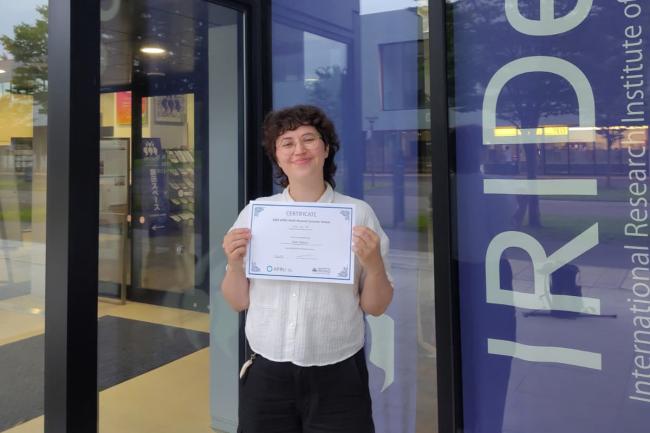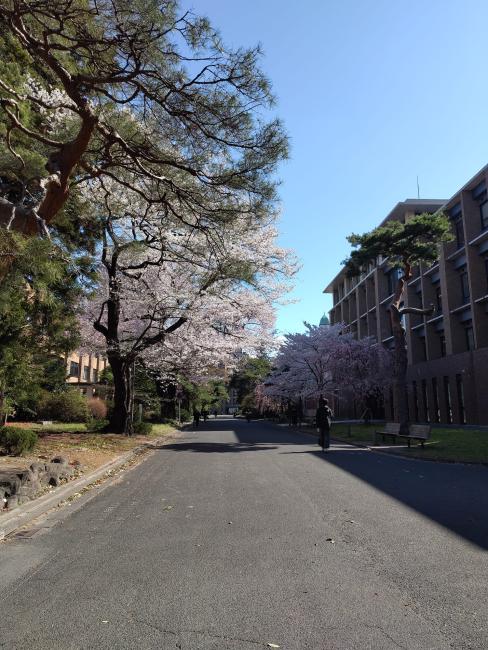
Japan attracts doctoral students from around the world, both as a host country and as a hub for international exchange. For Dide Dijkers from Karlstad University and Alireza Niknam Khajepasha from Hiroshima University, academic mobility has meant exposure to new research environments and striking cultural contrasts.
Dide Dijkers is currently undertaking a five-month exchange at Tohoku University in Sendai. Their research focuses on how people experience and cope with heat, comparing similar climate zones in Sweden and Japan.
“The idea is to explore how language and culture influence the way people perceive and manage heat, despite the climates being quite similar,” says Dide.
This is Dide’s first stay in Japan. Thanks to previous experience of living in other Asian countries, the cultural adjustment has been relatively smooth.
“Japan is very modern, and everyday life is in some ways quite similar to Sweden. People are fairly individualistic, but social norms are clearer and more influential.”
One noticeable difference is found in working life.
“Colleagues in Japan generally work much longer hours than in Sweden and have a poorer work-life balance. As an exchange doctoral student, it is an advantage to be able to retain Swedish working conditions.”
Alireza Niknam Khajepasha, originally from Iran, is a doctoral student at Hiroshima University and is currently undertaking an exchange in Sweden. His research focuses on digital twins and AI models for flood management, and his work in Sweden is being used to train and compare models that will later be applied in Japan.
“I believe more Japanese doctoral students should take the opportunity to spend time in other countries,” concludes Alireza. “Experiencing different academic cultures makes a significant difference.”
Both Dide and Alireza highlight international exchange as an important part of doctoral education.
“Being in Japan provides new perspectives, both academically and personally,” says Dide.
Jorge Solis, Project Leader for MIRAI at Karlstad University, sees considerable benefits in undertaking an exchange in Japan.
“It is an excellent opportunity for early-career researchers to broaden their research fields and interact with leading research groups at Japanese universities,” says Jorge Solis.
Interested in an Exchange in Japan?
During the autumn semester of 2026, doctoral students at Karlstad University will have the opportunity to undertake an exchange in Japan. A total of three places will be available: two one-month exchanges and one five-month exchange.
Further information will be published shortly on the MIRAI 3.0 website: