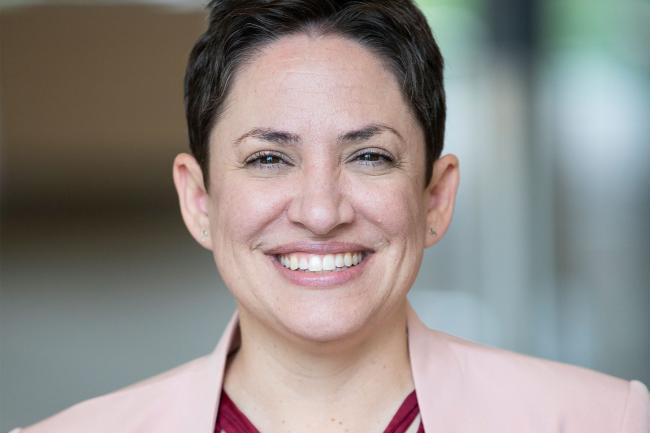
How can social services ensure that children who have been subjected to violence receive the support they need and are entitled to? This is the central question in a recently presented licentiate thesis in social work at Karlstad University.
In her thesis, Leigh Ann Loebs, former doctoral student in social work at Karlstad University and now working in Kils municipality, examines how children suspected of having been exposed to violence gain access to interventions from social services, and how team leaders support social workers in identifying and counteracting biases and inequalities in assessments—particularly in relation to children’s gender and family background.
– The results show that girls, children with Nordic family backgrounds, and children assessed as being at high risk of harm may be more likely to receive interventions from social services than other children, says Leigh Ann Loebs. These differences are mainly due to whether guardians consent to the interventions offered.
The licentiate thesis also analyses the role of team leaders in case management and how supervision can contribute to more equitable assessments.
– My findings show, among other things, that team leaders promote reflection and awareness of diversity through collective meaning-making, says Leigh Ann Loebs. The thesis also points to the need to address inequalities at individual, organisational and structural levels in order to reach more children in need of support from social services, and to ensure that children’s rights to a childhood free from violence and discrimination remain paramount.
The thesis combines quantitative and qualitative data and demonstrates how structural, organisational and interpersonal factors together shape children’s access to support. It concludes with a proposal for a rights-based approach within social services to strengthen children’s right to protection from violence.
– As long as we are not reaching every child with the support and protection from violence they need, we must continue to study this issue. I hope my findings will be useful for practitioners within social services and serve as support for team leaders, concludes Leigh Ann Loebs.