Non-apologies
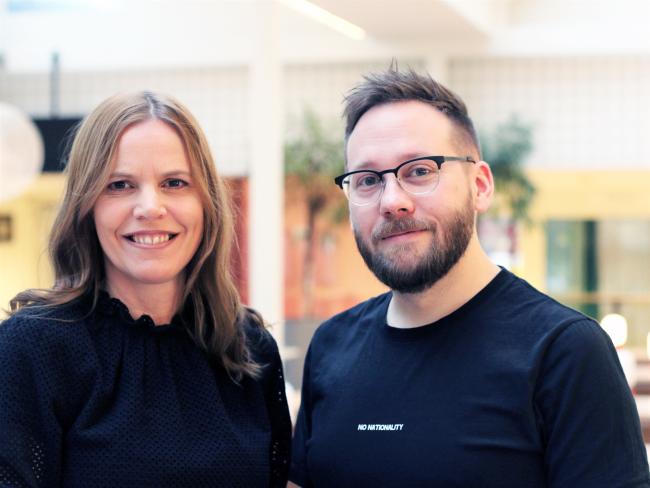
Non-apologies is a research project conducted at Karlstad University by Peter Wikström and Erica Sandlund. The project concerns public apologies associated with the #MeToo movement, and the reception of these apologies in traditional and social media. The project began in January 2020 and is expected to be finished by 2024. It is funded by the Bank of Sweden Tencentenary Foundation (Reg. no P19-0213:1)
SUMMARY
The aim of the project is to identify and analyze how discourse participants receive and reject public apologies in the wake of the #MeToo movement, in mediated journalistic interaction as well as in informal communication in social media. The reception of public apologies is studies with a focus on how discourse participants practice a kind of folk linguistics by appealing to various ideas and norms of what constitutes a proper apology. Further, these folk linguistic practices are analyzed as a form of everyday political participation in social media.
In the context of #MeToo, a number of prominent public figures have made statements after having been publicly accused of harassment or worse trespasses. Such statements have frequently been received by a lay public as insufficient or dishonest attempts to play at apologizing – as non-apologies.
Through case studies applying ethnomethodological conversation analysis (EMCA) and digital discourse analysis (DDA), the project with investigate, firstly, how the original apology statements were designed and delivered, and, secondly, how the reception of these statements as non-apologies has been articulated both in traditional journalistic discourse and informal discourse in social media. The results will be disseminated as international scientific journal articles as well as in a book project and through popular scientific venues.
The results are expected to shed light on the interface between language and politics at a time when both discursive and political norms are undergoing renegotiation in mediated contexts.
AIM AND RESEARCH QUESTIONS
Late 2017 saw the emergence of #MeToo, an exceptionally impactful social media-based awareness campaign centered on sexual assault and harassment. Stoking the campaign, both before and during, were a spate of high-profile public statements from prominent public figures – politicians, celebrities, and CEOs – accused of transgressions ranging from inappropriate workplace behavior to outright criminal assault. In both professional journalism and lay commentary in social media settings, such statements were often received as plays at apologizing that were insincere, incomplete, or otherwise inadequate. Especially in informal social media settings, there is a flora of metalinguistic terminology applied to such statements, including terms such as pseudo apologies, fauxpologies, nonpologies, or, simply, non-apologies. In this project, we will refer to these public statements and their reception as non-apology events.
This project will be based on linguistic and discourse analytic case studies of #MeToo-related non-apology events, with cases selected from Anglophone and Swedish contexts. We will examine the public statements themselves and, crucially, their reception in mediated interaction in journalistic and social media. Preliminary work on social media data suggests that metalinguistic, or ‘folk linguistic,’ negotiations of a public statement’s merits as an apology are rarely only that. Rather, the metalinguistic assessments are often interwoven with affectively charged moral and ideological positionings – for instance, in relation to party politics, social justice, feminism, and more (cf. Cameron, 2012). Thus, an investigation of the reception of #MeToo-related non-apologies also becomes an investigation into the language and politics interface as well as the language and gender interface. Accordingly, the aim of the project is to account for how the socially identified metalinguistic notion of a non-apology becomes a members’ method (cf. Garfinkel, 1967) for an everyday, micro-level and public doing of discursive moral assessment and political participation.
The aim is empirically operationalized through a three-part Research Question:
- In high-profile cases where a public figure has i) been accused of sexual misconduct, ii) issued a public statement socially recognized as a public apology event, and iii) had this statement widely rejected as a non-apology,
- How is the statement itself mediated, designed, and delivered as a public, accountable action?
- How is the reception of the statement as a non-apology articulated in journalistic mediated discourse?
- How is the reception of the statement as a non-apology articulated in informal social media discourse?
The project is significant in three main ways. First, it scrutinizes a socially recognized but under-researched discursive phenomenon, contributing novel empirical findings to the linguistic study of (public) apologies and metalinguistic norms pursuant to them. Second, the proposed combination of methods will shed light on micro-level practices and macro-level implications of the everyday doing of political participation. Such practices are also inevitably tied to the everyday and situated doing of morality and accountability (cf. Bergmann, 1998; Linell & Rommetveit, 1998), which in turn promises a contribution to the role of mediated discourse in assigning blame and constructing a sense of the appropriate management of transgressions in the eyes of the public. In light of the empirical case focus selected, the proposed project will especially shed light on political participation in the context of discourses on gender, and the gendering of transgressions and rejections themselves. Third, this discursive doing of politics is explored in the context of a socially mediated phenomenon, and in mediated interaction, contributing to a qualitative and critical understanding of emerging dynamics of civic engagement in the digital agora of an increasingly mediated world (Fuchs, 2017a; Johansson et al., 2017; Lindgren, 2017; Papacharissi, 2015).
RESEARCH TEAM
Peter Wikström, project leader, is associate professor of English linguistics. His research focuses on language and communication in social media.
Erica Sandlund, project researcher, is professor of English linguistics. Her research specialization is Conversation Analysis, especially as it applies to talk in institutional settings, organizations, and in classrooms.
PUBLICATIONS AND MEDIA
This page will be updated periodically throughout the project with project publications and media appearances.
ACADEMIC CONFERENCE PRESENTATIONS
- Wikström, P. & Sandlund, E. (2021). Doing accountability? On 'non-apologies' in the digital publics in the context of #MeToo. Paper presented at ASA 2021 'Responsibility', March 2021, online virtual conference, St. Andrews University, UK.
- Wikström, P. & Sandlund, E. (2021). On the mediated reception of public (non-)apologies in the era of #MeToo. Paper presented at AAAL 2021, March, 2021, online virtual conference.
- Wikström, P. (2019). Metalanguaging as resistance: The socially-mediated rejection of public apologies in the wake of #MeToo. Paper presented at CDSMR 2019, Critical Digital and Social Media Research, March, 2019, Umeå University, Sweden.
- Wikström, P. & Sandlund, E. (2018). Unacceptable non-apologies: The production and receipt of public apologies in mediated interaction in the wake of #MeToo. Paper presented at Nordisco 2018, November, 2018, Aarhus University, Denmark.
- Wikström, P. (2018). Nonpology unaccepted: Insincere apologies in social media discourse. Paper presented as ASLA 2018, May 2018, Karlstad University, Sweden.
MEDIA APPEARANCES AND PUBLIC OUTREACH
- Metoo-ursäkter närstuderas (Värmlands Folkblad, 2020-01-20)
- Hur säger man förlåt på bästa sätt? (P4 Värmland, 2020-02-22). The entire interview can be heard here
- Public lecture "Icke-ursäkt!" presented as thematic event on "Truth, lies, and language" arranged by Region Värmland and Agera Värmland (2020-09-08). More information here and a summary of the event here.
- Forskar i förlåtelsens svåra konst (Nya Wermlands Tidningen, 2020-09-10)
- Därför sitter kändisarnas ursäkter så långt inne (Dagens Nyheter, 2021-01-18)
- Inslag i P4 Extra med Titti Schultz (P4, 2021-01-28)