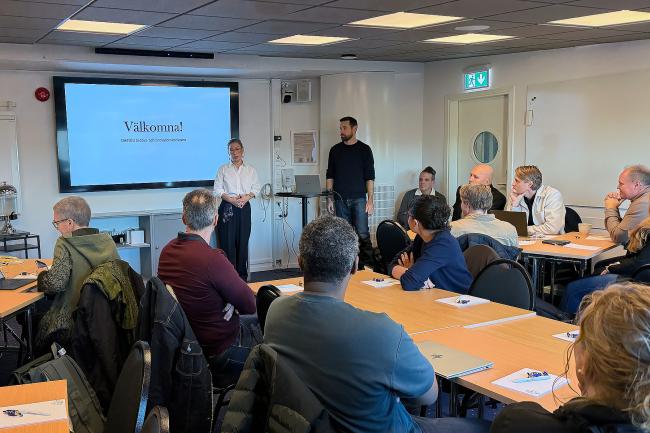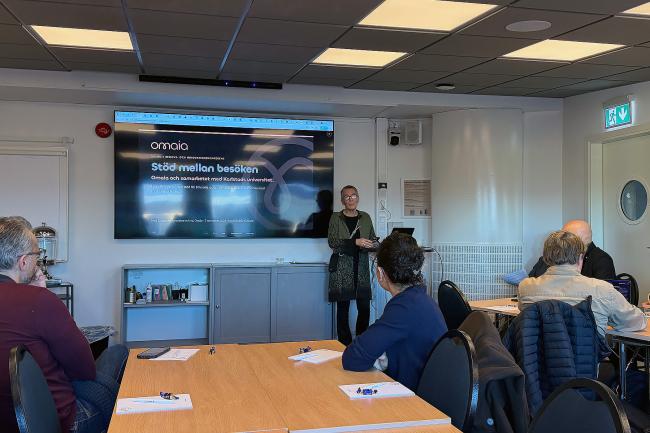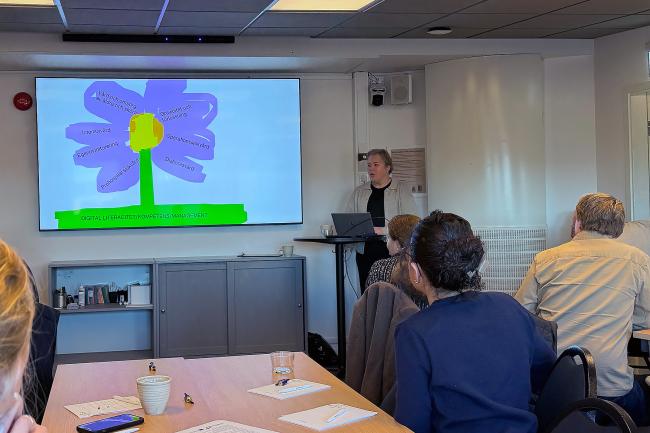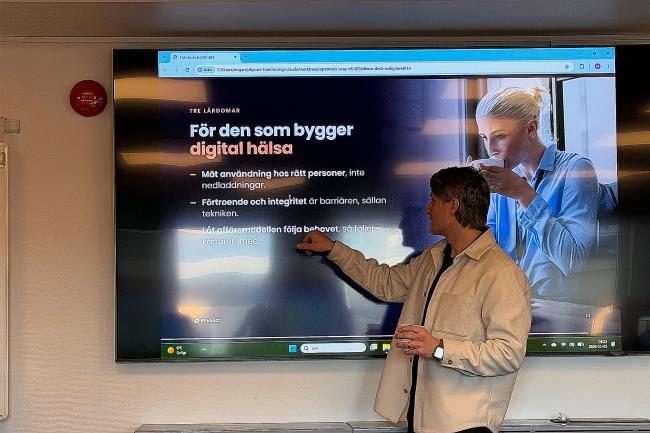

How can digital health services contribute to better healthcare and improved health, and what barriers need to be overcome to ensure wider adoption? These were the key questions explored when around 30 participants from academia, the public sector and industry gathered for a needs assessment and innovation conference on 5 November.
The conference was organised for the fifth consecutive year by the Digital Health Innovation Research Group (DHINO), coordinated by Charlotte Bäccman and Jakob Trischler at the Service Research Center (CTF) at Karlstad University.
“Over the years, our partner events and needs assessments have provided valuable insights, laid the foundations for new studies and projects, and played an important role in promoting the development of digital health innovations in the region,” says Charlotte Bäccman, Associate Professor of Psychology.
During the day, participants were introduced to both established and emerging digital health solutions, including an activity programme designed to reduce sickness absence in the workplace and a digital support tool for pregnant women between antenatal appointments. Researchers at Karlstad University presented their research on topics including digitalisation in healthcare, sleep robots, and how human rights can be integrated into technical systems and AI solutions from the outset.
Participants discussed issues such as quality assurance, AI, data security, business models and the balance between technology and human interaction. They also explored the need for reliable digital health services and the importance of trust in AI-based solutions.
Anna Nordin, Associate Professor of Nursing at Karlstad University, particularly highlighted the importance of collaboration between different professional groups and involving healthcare professionals, patients and their relatives in the development of sustainable innovations.
Trends that could shape the future of health and welfare
In the afternoon, participants discussed trends that could influence future health and welfare services, as well as emerging needs in areas such as new ways of working, professional roles and technological solutions. Demographic changes, mental health issues, involuntary loneliness, increasing polarisation and the digital divide were among the topics highlighted.
Johanna Delvert, Public Health Strategist at Region Värmland, emphasised the risk of widening digital divides, the challenges parents face in providing guidance and a sense of security for their children in a rapidly changing digital environment, and the difficulties public sector organisations face in reaching young people through the channels they actually use.
The way forward
Over the past five years, this interdisciplinary project, which brings together around 20 researchers from different disciplines and research groups at Karlstad University, has provided a platform for public sector organisations and businesses to come together to discuss the future of digital health services and identify new needs and opportunities.
“Working across disciplinary and organisational boundaries is both challenging and inspiring. When people with different skills and perspectives come together, better conditions are created for addressing complex issues collaboratively,” says Jakob Trischler, Associate Professor of Business Administration.
The conference was the final annual conference held as part of the project. Its aim was not only to share knowledge but also to identify needs that could provide a basis for future research and innovation.
“The project is now coming to an end, but the work will continue. The focus is now on bringing together the project's findings and securing funding for further research and development in this field,” says Charlotte Bäccman.
• Learn more: https://www.kau.se/en/dhino